
Friday, January 15, 2010

Monday, January 11, 2010
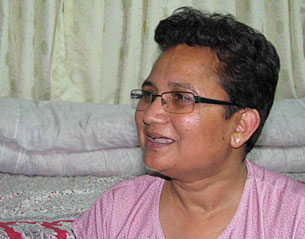
Nepali Mahila : Renu Kumari Yadav (Nep) रेणुकुमारी यादव

पूर्वमन्त्री, शिक्षा
सदस्य, संविधानसभा
केन्द्रीय सदस्य, मधेशी जनअधिकार फोरम
जन्मः सन् १९६३, बिहार, भारत
सदस्य, संविधानसभा
केन्द्रीय सदस्य, मधेशी जनअधिकार फोरम
जन्मः सन् १९६३, बिहार, भारत
रेणुकुमारी यादवको जन्म भारत बिहारको फारबिसगन्जस्थित गरुराह गाउँमा जुन २०, १९६३ मा राजनीतिक परिवारमा भएको थियो । समय र परिस्थितिले उहाँलाई नेपालको राजनीतिक परिदृश्यमा माथिल्लो तहमा पुर्याएको छ । उहाँको जनताप्रतिको प्रतिबद्धताले धेरै कम सफल मधेशी महिला राजनीतिकर्मीमध्ये एक बनाउन सहयोग गरेको छ ।
यादवको संयुक्त परिवार थियो जसमा बुबाको परिवार र दुईजना काकाहरु हुनुहुन्थ्यो । सबैको राजनीतिमा निहित चासो थियो र समाजमा नयाँ विकासक्रम चाहनुहुन्थ्यो । उहाँका बुबा रामेश्वर प्रसाद यादवले दुईवटा विषयमा स्नातकोत्तर गर्नुभएको थियो भने आमा चिन्तामणी देवीले एसएलसी गर्नुभएको थियो । यो पढेलेखेको परिवार थियो र समाज रुढीवादीग्रस्त भए पनि उहाँको परिवारले केटीहरुलाई विद्यालय पठाउन उत्साह प्रदान गरेको थियो र कुनै प्रकारको विभेद देखाएन ।
यादवले गाउँकै कन्या माध्यमिक विद्यालय र भगवतीदेवी बालिका माध्यमिक विद्यालयमा अध्ययन गर्नुभयो । त्यसबखत कलेजमा केटीहरु देखिनु दुलभ थियो र उच्च शिक्षा हासिल गर्नका निम्ति छोरीहरुलाई अनुमति दिने उहाँको परिवार पहिलो थियो । मिथिला विश्वविद्यालय अर्न्तर्गतको फारबिसगन्ज कलेजबाट उहाँले इतिहास विषयमा स्नातक तह उत्तीर्ण गर्नुभयो तर उहाँको दुलाहाको घरमा अध्ययनलाई महत्व नदिइएका कारण उहाँको अध्ययनमा छोड्नु परेको थियो ।
यादवको संयुक्त परिवार थियो जसमा बुबाको परिवार र दुईजना काकाहरु हुनुहुन्थ्यो । सबैको राजनीतिमा निहित चासो थियो र समाजमा नयाँ विकासक्रम चाहनुहुन्थ्यो । उहाँका बुबा रामेश्वर प्रसाद यादवले दुईवटा विषयमा स्नातकोत्तर गर्नुभएको थियो भने आमा चिन्तामणी देवीले एसएलसी गर्नुभएको थियो । यो पढेलेखेको परिवार थियो र समाज रुढीवादीग्रस्त भए पनि उहाँको परिवारले केटीहरुलाई विद्यालय पठाउन उत्साह प्रदान गरेको थियो र कुनै प्रकारको विभेद देखाएन ।
यादवले गाउँकै कन्या माध्यमिक विद्यालय र भगवतीदेवी बालिका माध्यमिक विद्यालयमा अध्ययन गर्नुभयो । त्यसबखत कलेजमा केटीहरु देखिनु दुलभ थियो र उच्च शिक्षा हासिल गर्नका निम्ति छोरीहरुलाई अनुमति दिने उहाँको परिवार पहिलो थियो । मिथिला विश्वविद्यालय अर्न्तर्गतको फारबिसगन्ज कलेजबाट उहाँले इतिहास विषयमा स्नातक तह उत्तीर्ण गर्नुभयो तर उहाँको दुलाहाको घरमा अध्ययनलाई महत्व नदिइएका कारण उहाँको अध्ययनमा छोड्नु परेको थियो ।
यादवले सन् १९८१ मा नेपालको सप्तरी जिल्लाका अशोककुमार यादवसँग मागी विवाह गर्नुभयो । प्रस्ताव दुलाहाको घरबाट आएको थियो र भाग्यवश दुलाहाको परिवार समेत राजनीतिक थियो । उहाँका बुढा-ससुरा बिन्देश्वरीप्रसाद यादव राजनीतिक व्यक्तित्व एवँ सामाजिक कार्यकर्ता हुनुहुन्थ्यो । उहाँका ससुरा इन्द्रदेवप्रसाद पञ्चायतकालमा साँसद हुनुहुन्थ्यो । यादवको परिवारिक जीवन धेरै सफल थियो र उहाँबाट चाँडै नै एक छोराको जन्म पनि भयो । उहाँ असल गृहिणी हुनुहुन्थ्यो र परिवार एवँ पारिवारिक मामिलामा सहयोग गर्न पाउँदा उहाँलाई खुशी लाग्दथ्यो ।
तैपनि, उहाँको खुशीयाली दाम्पत्य जीवन लामो समयसम्म रहेन । ससुराको मृत्युपश्चात उहाँको श्रीमान्ले आफ्नो राजनीतिक जीवनलाई निरन्तरता दिनुभयो र जिल्लाको राजनीतिमा सक्रिय हुनुहुन्थ्यो । उहाँ जिल्ला पञ्चायतमा प्रतिष्पर्धा गर्न चाहनुहुन्थ्यो । सन् १९८६ मा निर्वाचन हुनु दुईमहिना पहिले उम्मेदवारीका विषयमा परिवारभित्र विवाह सिर्जना भयो र काकाले अशोकमाथि गोली हानेर हत्या गरे ।
चारवर्षति यादवले घरयासी काममै व्यस्त राख्नुका साथै घरमै चुपचाप र पीर मानेर समय व्यतित गर्नुभयो । श्रीमान्को मृत्युपश्चात उहाँ सासु, छोरा र आफूमात्रको सानो परिवारको रुपमा बस्न थाल्नुभयो । तर्राईका गाउँहरुमा सामान्यतया हुने गरेको कुराभन्दा भिन्न उहाँकी सासुले राजनीतिमा प्रवेशका निम्ति पूर्णरुपमा र्समर्थन गर्नुभयो । जनआन्दोलन १९९० पछि राजनीतिक दृश्यमा पूर्णत परिवर्तन आयो । "मैले सोचेँ म घरबाट बाहिर निस्कनुपर्दछ र आफ्नो क्षेत्र एवँ मुलुकका निम्ति जतिसक्दो केही योगदान गर्नुपर्दछ । मैले मेरा पतिकै मार्गलाई पछ्याउने निर्णयगरेँ," उहाँले भन्नुभयो ।
यादवले प्रारम्भमा सन् १९९१ मा नेपाली काङ्ग्रेसमा प्रवेश गर्नुभयो । स्थानीय क्षेत्रमा उहाँको इमान्दारिता र लोकप्रियताका कारण उहाँलाई तुरुन्तै नेपाल महिला संघको जिल्ला सभापति बनाइयो र उहाँ महिलालाई राजनीतिक मामिलामा छलफल चलाउनका निम्ति स्थानीय महिला भेलाहरुमा सक्रिय हुनुभयो । परिवर्तित राजनीतिक पर्रि्रेक्ष्यमा मानिसले वास्तवमै के चाहन्छन् भनेर बुझ्नका निम्ति यसले ठूलो मद्दत पुर्यायो ।
यादवको राजनीतिमा प्रवेश र लोकप्रियता स्थानीयहरुका निम्ति आर्श्चर्यजनक थियो । यथार्थमा, उहाँका धेरैजना ससुराहरु उहाँका प्रतिष्पर्धी बने र बुहारी राजनीतिमा प्रवेश गर्नु स्वीकारयोग्य नहुने बताउन थाले । उनीहरु महिलाले स्वतन्त्र पहिचान बनाउनु सामाजिक मान्यता विपरीत हुने र राजनीति कपाल फुलेका व्यक्तिहरुले गर्ने हो भन्ने गर्दथे ।
राजनीतिक परिवर्तनको लगत्तै पहिलो संसदको चुनाव सन् १९९१ मा सम्पन्न भयो । यादव जिल्लामा सक्रिय हुनुहुन्थ्यो र चुनावमा प्रतिष्पर्धा गर्न चाहनुहुन्थ्यो तर उहाँको दलले चुनावका निम्ति टिकट दिएन । जिल्लाका नेपाली काङ्ग्रेसका केही कार्यकर्ताहरु उहाँको बढ्दो लोकप्रियताप्रति खुशी थिएनन् र नेपाली काङ्ग्रेसका आधिकारिक उम्मेदवारका बिरुद्धमा बागी उम्मेदवार हुने हल्ला फिँजाइदिए । पराजित हुनासाथ उहाँको राजनीतिक करिअर समाप्त हुने अड्कलबाजी गरियो । "म वास्तवमा व्रि्रोही उम्मेदवारको रुपमा चुनाव लड्न चाहन्नथे तर स्थानीय जनताको दबाबका कारण मैले स्वतन्त्र उम्मेदवारको रुपमा चुनावमा उठ्ने निर्णयगरेँ । दुभाग्यवश, मैले जित्न सकिन," उहाँ भन्नुहुन्छ ।
त्यसबखत धेरै कम मधेशी महिला राजनीतिमा संलग्न हुनुहुन्थ्यो । चुनावमा पराजित भएपनि यादवले आफूभित्र राजनीतिक सम्भावना रहेको प्रमाणित गर्नुभयो र धेरैवटा राजनीतिक दललाई ध्यानाकषिर्त गर्नुभयो । पूर्व पञ्चायती नेता र्सूयबहादुर थापा र हेमबहादुर मल्लको ससुरासँग राम्रो सम्बन्ध थियो र उहाँहरुले सन् १९९३ मा राष्ट्रिय प्रजातन्त्र पार्टीकोराप्रपा) मा प्रवेशका निम्ति राजी गराउनुभयो । राप्रपाको सदस्यको रुपमा पहिचान स्थापित गराउनु अझ डरलाग्दो विषय थियो । "जुनसुकै पार्टीको आवद्ध भए पनि मैले जनताका निम्ति इमान्दारीपूर्वक काम गरेमा म सफल हुनसक्छु भन्नेमा म अझ पनि विश्वस्त थिएँ," राप्रपामा प्रवेशका सर्न्दर्भमा उहाँले भन्नुभयो ।
यादवले नेपाली काङ्ग्रेसभित्र प्रगति गर्न असफल हुनुका साथै पार्टीभीत्र दुश्मन मात्र कमाउनुभयो । उहाँले राप्रपाभित्र मैत्रीपूर्ण वातावरण प्राप्त गरेको अनुभव गर्नुभयो र उहाँ केन्द्रीय समिति सदस्यमा निर्वाचित हुनुभयो, यो ठूलो जिम्मेवारी थियो । उहाँले सन् १९९४ को संसदीय चुनावमा प्रतिष्पर्धा गर्नुभयो । उहाँ यसपटक पनि पराजित हुनुभयो तर पार्टीका निम्ति कडा परिश्रम गरिरहनुभयो । उहाँको अन्त्यहीन प्रयासका कारण उहाँले सन् १९९९ मा सप्तरीको क्षेत्र न. ३ बाट चुनाव जित्नुभयो र प्रतिनिधिसभाको सदस्य बन्नुभयो ।
यादव उत्साही हुनुहुन्थ्यो र संसदमा आम जनताको आवाजलाई पुर्याउने गहन जिम्मेवारी बोध गर्नुभएको थियो । संसदमा उहाँले नियमितरुपमा जनताका सवालहरुलाई उठाउने, निर्वाचन क्षेत्रका निम्ति बजेटको व्यवस्था गर्ने र स्थानीय विकासतर्फयोगदान गर्नेतर्फकार्य गर्नुभयो । तर मे २००२ मा संसद विघटन भयो ।
यादवले सिँहदरवार प्रवेश गर्नुअघि गाउँका जनताको प्रतिनिधिको रुपमा संसदको ठूलो तस्वीर परिकल्पना गर्नुभएको थियो । नेपाली काङ्ग्रेसको हरेक कुरामा आधिपत्य थियो र अन्य पार्टीको आवाज उठाउनु केवल कर्मकाण्ड मात्र थियो । सरकारमा बस्ने मानिसको ध्यान आफ्नो स्थान सुरक्षित राख्ने र विपक्षीको काम सरकार ढाल्नेतर्फमात्र केन्द्रित थियो । "म केही समय निराश भएँ । राज्यभित्र कहिँपनि पद्धतिले काम गरेको थिएन । तर मुलुकलाई परिवर्तन गर्नका निम्ति लोकतन्त्र र सँसद नै प्रमुख साधन रहेकोमा म विश्वस्त थिएँ ।"
र्सूयबहादुर थापा प्रधानमन्त्री रहँदा जुन २००३ मा यादवले कबिर ११ महिनासम्म महिला, बालबालिका तथा समाजकल्याण मन्त्रीको कार्यभार सम्हाल्नुभयो । यो अवधि चुनौतिले भरिएको थियो । नेपाली काङ्ग्रेस र नेपाल कम्युनिष्ट पार्टीकाएमाले) समेतका अधिकाँश राजनीतिक दलले शक्ति पुनः प्राप्त गर्नका निम्ति राजा ज्ञानेन्द्रका बिरुद्धमा सडक प्रदर्शन आरम्भ गरेका थिए । माओवादीहरु जङ्गलमा बसेर शसस्त्र संर्घष गरिरहेका थिए । पशुपति शम्शेर राणाको नेतृत्वमा रहेको उहाँको पार्टीको एउटा समूहले आन्दोलनमा समाहित हुन सडकमा उत्रियो । "तर छ सदस्यीय मन्त्रिपरिषद्ले मुलुकमा सहजतापूर्वक शासन गरिरहेको थियो । समग्र परिणाम उत्साहजनक थियो र हामीहरु विवादित भएका थिएनौं," उहाँले बताउनुभयो ।
राप्रपा दुईवटा पार्टीमा विभाजित भएको र थापाले राष्ट्रिय जनशक्ति पार्टीआरजेपी) समेत गठन गरेपछि यादवको अघिल्तिर छनौट गर्नुपर्ने अवस्था सिर्जना भयो । राजाको सरकारलाई जनशक्ति पार्टीको र्समर्थन गरिरहेको भए पनि राजाको असंवैधानिक कदमको बिरुद्धमा बोल्ने यादव केही नेतामध्ये एक हुनुभयो र सप्तरीमा राजाको प्रत्यक्ष शासनको बिरोधमा सञ्चालित आन्दोलनमा व्यक्तिगतरुपमा सप्तरीमा भाग लिनुभयो । उहाँका बिरुद्धमा पार्टीले कारवाही गर्नुअघि नै राजाले शासन त्याग गरे र अप्रिल २००६ मा संसद पुनर्स्थापित भयो ।
राप्रपा दुईवटा पार्टीमा विभाजित भएको र थापाले राष्ट्रिय जनशक्ति पार्टीआरजेपी) समेत गठन गरेपछि यादवको अघिल्तिर छनौट गर्नुपर्ने अवस्था सिर्जना भयो । राजाको सरकारलाई जनशक्ति पार्टीको र्समर्थन गरिरहेको भए पनि राजाको असंवैधानिक कदमको बिरुद्धमा बोल्ने यादव केही नेतामध्ये एक हुनुभयो र सप्तरीमा राजाको प्रत्यक्ष शासनको बिरोधमा सञ्चालित आन्दोलनमा व्यक्तिगतरुपमा सप्तरीमा भाग लिनुभयो । उहाँका बिरुद्धमा पार्टीले कारवाही गर्नुअघि नै राजाले शासन त्याग गरे र अप्रिल २००६ मा संसद पुनर्स्थापित भयो ।
"शाही हत्याकाण्ड भएलगत्तै सन् २००१ मा संसद सदस्य रहेकै अवस्थामा मैले पूर्वराजा ज्ञानेन्द्रसँग भेट गर्ने मौका पाएकी थिएँ । उनले आफूले कार्यकारी अधिकार लिने समय आएको छैन र भनी मलाई सोधेका थिए । सेना तपाईंको साथमा रहे पनि जनता नरहेको मैले स्पष्टरुपमा बताएकी थिएँ," उहाँ सम्झनुहुन्छ ।
राजतन्त्र समाप्त भयो र माओवादी द्वन्द्व पनि अन्त्य भयो तर सबैका निम्ति परिस्थिति त्यति अनुकूल भएको थिएन । प्रतिनिधिसभामा माओवादीको सहभागिता भएपछि समग्र संसदीय प्रणालीमा आमूल परिवर्तन भएको अनुभव गर्नुभएको थियो । धेरैवटा महत्वपूर्ण कुराहरुलाई सहमतिका नाममा उपेक्षा गरिएको थियो र पञ्चायत पृष्ठभूमि भएका राजनीतिक दलका नेता तथा कार्यकर्तालाई पन्छाइएको थियो ।
अन्तरिम संविधानको मस्यौदा तयार भयो तर यसले आदिवासी जनजाति, महिला, दलित र मधेशीको अधिकारलाई महत्व दिएको थिएन । त्यसकारण यादवले संविधानको प्रति जनाउने प्रदर्शनमा सहभागिता जनाउनुभयो । "राजामात्र होइन कसैले पनि निरङ्कुशता प्रदर्शन गरेमा त्यसका बिरुद्ध आवाज उठाउने प्रण गरेँ," उहाँ भन्नुहुन्छ ।
मधेशीलाई वर्षौंदेखि अपहेलना गरिएको छ । तिनीहरुले आफ्नो आवाज नसुनिएको अनुभव गर्दै आएका छन् र तिनीहरुलाई राजनीतिक रङ्गमञ्चमा दरिलो र महत्वपूर्णरुपमा आवाज उठाउन जरुरी भएको थियो । "मलाई मधेशी जनअधिकार फोरममा प्रवेश गर्न निमन्त्रणा गरिएको थियो । एकीकृत र शक्तिशाली पार्टीसउ उपस्थितिले मात्र केन्द्र सरकारले मधेशीलाई न्याय प्रदान गर्नसक्ने अनुभव गरेकी थिएँ," उहाँ भन्नुहुन्छ । त्यसलगत्तै उहाँलाई मधेशी जनअधिकार फोरमको केन्द्रीय समिति सदस्यमा समावेश गरियो ।
मधेशी जनअधिकार फोरमको प्रतिनिधित्व गर्दै उहाँले सप्तरी क्षेत्र न.४ बाट संविधानसभा सदस्यमा उठ्नुभयो र विजयी बन्नुभयो ।
यादवका अनुसार आजका समस्याको जड नै साझा संयुक्त सरकार निर्माणको जरुरीमा निर्भर छ । राजनीतिक दलका नेताहरु सत्ताका निम्ति एकठाउँमा बस्ने गरेका छन् तर तिनीहरुले एकअर्कालाई गालीगलौज गरिरहेका हुन्छन् । "केही नेताहरु अर्को राजनीतिक दललाई विभाजन गराउनेसम्मका कार्यमा लागेका छन् । केही मुठ्ठीभरका नेताहरुको निहित स्वार्थका कारण समग्र मुलुक नै पीडित भइरहेको छ," उहाँ भन्नुहुन्छ ।
संसदमा अन्तरिम संविधानप्रति विभिन्न राजनीतिक दलका सदस्यहरुले असहमति प्रस्तुत गरे पनि तिनीहरुले निर्णयनिर्माणका महत्वपूर्ण क्षणमा आत्मर्समर्पण गरेको देखिन्छ । "मेरो निम्ति यो भ्रान्तिकै कुरा हो किनभने तिनीहरु सबैका मुद्दाहरु छन् तर तिनीहरु पार्टीीे दाश भएका छन् । यही कारण संसदबाट केही महत्वपूर्ण विषयहरु पारित नभएको मेरो बुझाइ छ । ठूला राजनीतिक दलहरु उच्च जातिका हिन्दु पहाडी समुदायको पकडमा रहेसम्म सबैका निम्ति कसरी न्याय हुनसक्छ -," उहाँ भन्नुहुन्छ ।
पुष्पकमल दाहाल प्रचण्डको नेतृत्वमा अगष्ट २००८ मा गठन भएको मन्त्रिपरिषद्मा यादवले शिक्षा मन्त्रीको जिम्मेवारी पाउनु भएको थियो । निजी विद्यालयलाई कर लगाउनेजस्ता विषयसँग माओवादीका तर्फाट अर्थमन्त्री हुनुभएका डा. बाबुराम भट्टराइसँग उहाँले चुनौतिको सामना गर्नुपरेको थियो । "केही दिनसम्म यो निक्कै कठिन थियो । कुनै कारणबेगर कार्यालयहरुमा तालाबन्दी गरिएको थियो । तर मैले सबै पक्षलाई सहमतिमा ल्याएँ र त्यसपछि ठिकरुपमा काम अघि बढ्न थाल्यो," उहाँले भन्नुभयो ।
शिक्षकहरुको नियुक्ती, आरक्षण विधेयक र पाँच विकास क्षेत्रमा शहीद एकेडेमी खोल्ने प्रक्रिया यादवको कार्यकालका केही प्रमुख योगदान हुन् । तर दाताहरुसँग उहाँको तीतो अनुभव छ र नेपालको राष्ट्रिय कार्यक्रममा उनीहरुको प्रभाव बढेको निष्कर्षा उहाँ पुग्नुभयो । उनीहरु नेपाललाई सहयोग गर्न तयार थिएनन् । उनीहरु आफ्नो स्वार्थका आधारमा सरकारमाथि दबाब दिइरहेका हुन्थे ।
यादवले आफ्नो राजनीतिक जीवनमा धेरैवटा समस्याको सामना गर्नुपर्यो तर यी समस्याहरु महिला भएको आधारसँग सम्बद्ध थिएनन् । "महिला हुँदा स्वाभाविकरुपमा केही फरक पर्दछ तर मसँग प्रतिबद्धता थियो र मलाई दिइएको कुनै पनि जिम्मेवारी पूरा गर्दछु भन्ने साहस थियो । त्यर्सथ, मैले महिला भएको नाममा राजनीतिलाई कहिल्यै उपयोग गरेकी थिइन । मैले हरेक कठिन क्षणहरुलाई सामान्यरुपमा लिएँ र यस्ता समस्या पुरुष र महिला दुवैले सामना गर्नुपर्दछ भन्ने मेरो सोचाइ थियो," उहाँ भन्नुहुन्छ ।
इमान्दारीपूर्वक काम गरेमा उपलब्धीहरु स्वाभाविकरुपमा हासिल हुने उहाँको धारणा छ । "मैले अझ कडा मेहनत गर्नुपर्दछ भन्ने सोचेकी छु । हामी सबैले इमान्दारीका साथ कडा परिश्रम गरेमा परिवर्तन ल्याउन सकिन्छ । इमान्दारीताको मार्गबाट कहिल्यै बिचलित नभएकोले नै म सन्तुष्ट हुन सकेको अनुभव गरेकी छु ।"
http://web.archive.org/web/20141011003506/http://www.wwj.org.np:80/mahila/nep/nep_renu_k_yadav.html
Sunday, January 10, 2010
Nepali Mahila : Renu Kumari Yadav
Renu Kumari Yadav
Member of the Constituent Assembly
Central Committee Member of the Madhesi Janaadhikar Forum
Former Minister for Education
Born in 1963 in Bihar, India
Renu Kumari Yadav was born to a political family in Garurah village of Farbishgunj in Bihar on June 20, 1963. Time and consequences led her to a top position in Nepal's political sphere. Her commitment to the people helped her become one of very few successful Madhesi women politicians.
Yadav's was a joint family, consisting of her father's family and two younger uncles. All had an inherent interest in politics and wanted to see new developments in society. Her father, Rameshwar Prasad Yadav, had double MA degrees, while her mother, Chintamani Devi, also matriculated. It was an educated family and although society was conservative her family encouraged its girl members to attend school, never showing any kind of discrimination in that respect.
Yadav studied in Kanya High School and Bhagwati Devi Girls High School in her village. Seeing girls in colleges was rare and her family was one among the first to give their daughters permission to undertake higher education. She completed her bachelor's degree in history from Farbishgunj Collage of Mithila University, however her education was discontinued after her marriage as no importance was given to study in her groom's house.
Yadav married Ashok Kumar Yadav by arrangement in Nepal's Saptari district in 1981. The proposal came from the groom's side and fortunately her groom's family was also political. Her grandfather-in-law, Bindeshwari Prasad Yadav, was a politician and a social worker, while her father-in-law, Indradev Prasad, was a parliamentarian during the Panchayat period. Yadav's family life was very successful and she soon gave birth to a son. She was a good housewife and found happiness in helping the family and the family business.
However, her happy conjugal life did not last long. After her father-in-law's death, her husband continued his political life and was active in district-level politics. He wanted to contest the election of District Panchayat. In 1986, two months before the election, a dispute took place within the family over her husband's nomination for election which culminated in her husband's uncle shooting him dead.
For four years or so, Yadav kept herself busy with household chores, staying home in silence and solitude. After her husband's death, she lived as part of a small family consisting of her mother-in-law, her son and herself. Contrary to what usually happens in Tarai villages, her mother-in-law fully supported her entrance into politics. The political scene had changed after the People's Movement in 1990. "I thought I should come out of my home and contribute to my region and my country as much as possible. I decided to follow the way of my husband," she said.
Yadav first joined the Nepali Congress (NC) in 1991. Because of her sincerity and popularity in the local area, she quickly became district chairperson of the Nepal Women's Association, becoming heavily involved in gathering local women together to discuss political issues. It helped her understand exactly what people wanted in terms of the changing political context.
Yadav's coming into politics and swift popularity was almost shocking for locals. Indeed, several of her father-in-law's competitors became her rivals and could not accept that a daughter-in-law, one whose independent identity was taboo in the society, was more popular than the gray-haired male politicians.
The first parliamentary election after the political change took place in 1991. Yadav was quite active in the district and wanted to contest in the election but her party denied her a ticket to stand the election. Some NC workers in the district were not happy with her growing influence and provoked her to contest as a rebel candidate against the formal NC candidate, so her defeat would terminate her political career. "I really did not want to contest as a rebel candidate, but out of local pressure I gave my candidature as an independent candidate. Unfortunately, I could not win," she said.
At the time very few Madeshi woman were involved in politics. Although she was defeated, Yadav proved she had political potential and drew attention from various political parties. Former Panchayat leaders Surya Bahadur Thapa and Hem Bahadur Malla had good relations with her father-in-law and persuaded her to join the Rashtriya Prajatantra Party (RPP) in 1993. It was even dangerous to be identified as a RPP member. "Still, I was confident that if I worked sincerely for the people I could be successful, no matter which party I was affiliated with," she said in explanation of her subsequent joining of the RPP.
Yadav failed to progress within the NC and had instead earned enemies in the party. She felt the environment in the RPP was friendlier and she was soon elected a central committee member, a huge responsibility. She contested in the parliamentary election in 1994. She was again defeated but kept working hard for the party. Because of her endless efforts, she won the election in 1999 from the Saptari-3 constituency and became a member of the House of Representatives.
Yadav was enthusiastic and felt a huge sense of responsibility to bring the voice of the needy to the House. She regularly raised issues of relevance in the House, brought forward a budget for the constituency and contributed largely towards local development. However, the House was dissolved in May 2002.
Yadav possessed a great image of Parliament before she entered Singha Durbar. She had promised villagers days would soon be brighter only to find all was not as she had envisioned there. The Nepali Congress had a monopoly on everything and the voices of other parties were just ritual. The people in government were more concerned about their seats and the opposition did all they could to topple the government. "I had gone through a short period of frustration. Systems worked nowhere in the state. But I strongly believed that democracy and Parliament were the only means to change the country."
In June 2003 Yadav took the portfolio of Minister for Women, Children and Social Welfare under Surya Bahadur Thapa's premiership for around 11 months. She said the period was full of challenges. Most parties, including the Nepali Congress and the Communist Party of Nepal (Unified Marxist-Leninist), took to the streets to protest King Gyanendra's move to take power and the Maoists were in the jungle fighting the armed struggle. Even a faction in her party, led by Pashupati Shamsher Rana, went to the streets to join the movement. "But the six-member cabinet ran the whole country smoothly. The overall results were quite encouraging and we were always above controversies," she explained.
When the RPP divided into two parties and Thapa formed the Rastriya Janshakti Party (RJP), Yadav also chose to join. When the RJP was supporting the king's government, she was one among a few leaders who spoke out against the unconstitutional move of the king and personally took part in the movement against the king's direct rule in Saptari. Before the party could take action against her, the king gave up and Parliament was restored in April 2006.
"I had a chance to meet former King Gyanendra when I was a parliamentarian soon after the royal massacre in 2001. He asked me if his time (to hold executive power) had come. I told him clearly that the army was with him but not the people," she remembered.
The monarchy was abolished and Maoist conflict ended, but the situation was not favorable for all. She saw a change in the whole parliamentary system after the Maoists joined the House. Many important things were overlooked in the name of compromise and those politicians with a Panchayat background were obviously sidelined.
The interim constitution was drafted but it failed to take into account the rights of ethnic people, women, Dalits and Madhesis, so Yadav participated in a protest to burn copies of the constitution. "It is not only the king, I raised my voice whenever someone tried to show up as an autocrat," she said.
The Madhesis have been undermined for a long time. They felt their voices were unheard and they needed one of their own to be given a strong and significant role in the political arena. "I was invited to join the Madhesi Janaadhikar Forum (MJF). I felt only a unified and forceful party could make the centralized government do justice to the Madhes," she said. She was then included in the MJF Central Committee.
Representing the MJF she contested in the election of the Constituent Assembly from Saptari-4 in April 2008 and was elected.
According to Yadav, the root of today's problems lies in the necessity of making a coalition government. Leaders of political parties may all sit together to enjoy the power but they keep opposing one another. "Some leaders go to the extent of splitting others' parties. The whole country is suffering because of the vested interests of a handful of people," she said.
In the House, although members from different parties showed their disapproval of the interim constitution, they still surrendered to their parties on decision-making day. "It was a kind of disillusion for me that they all have issues but they admitted to party-slavery. I realized this is the reason some genuine issues are not passed in the House. If all the big parties are in the grips of high-caste Hindu Pahadis, how can justice for all be possible?" she asked.
Yadav was appointed Minister for Education in the cabinet, led by Prime Minister Pushpa Kamal Dahal in August, 2008. She faced challenges from the outset as her opinions clashed with those of Maoist Finance Minister Dr Baburam Bhattarai, mainly on issues such as taxing private schools. "For some days it was quite tough. The offices were padlocked for no good reason and I could not find out which factor came to protest. But later I managed to bring all the forces to a compromising point and things began to run smoothly," she said.
Recruitment of teachers, the Reservation Bill, and the process of opening a Martyr's Academy in five development regions were some of Yadav's major contributions during her tenure. But she had bitter experiences with donors and came to realize they were influencing Nepal's national program. They were not ready to help the country and were instead pushing the government to do things for themselves.
Yadav has faced a series of problems in her political life, but insists these problems were not related to her being a woman. "Being a woman was naturally different but I had a determination and I knew I could accomplish any task. So, I never tried to do politics saying I'm a feminist. I took every tough situation normally, thinking that such problems may come in front of a man as well as a woman," she said.
She added that achievement naturally follows when one works sincerely. "I feel that I should work harder. Changes can be brought if we all work hard, with sincerity. And I feel happy thinking that at least I've never deviated from the path of sincerity," she added.
Written by Razen Manandhar
http://web.archive.org/web/20141011002347/http://www.wwj.org.np:80/mahila/profile_renu_kumari_yadav.html
Saturday, January 9, 2010
Nepali Mahila : पम्फा भूसाल
पम्फा भूसाल
पूर्वमन्त्री, सामान्य प्रशासन मन्त्रालय
पोलिटब्युरो सदस्य, एकीकृत नेकपा -माओवादी)
सदस्य, संविधानसभा
जन्मः सन् १९६२, अर्घाखँची जिल्ला
पम्फा भूसालको जन्म अर्घाखँची जिल्लाको किमडाँडा गाउँ विकास समितिमा जुलाई १९६२ मा भएको थियो । पितृसत्तात्मक सोचबाट ग्रस्त समयमा उहाँ चौथो छोरी हुनुहुन्थ्यो र त्यसबखत गाउँको परिवेशमा छोरा हुनैपर्ने धारणा व्याप्त थियो । अर्को छोरी जन्मदा उहाँकी आमा इन्द्रकला भूसाललाई ठूलो पीडा हुन्थ्यो । हजुरबुबा परालको कुन्युबाट लडेकै वर्षउहाँको जन्म भएको थियो, त्यसकारण उहाँकी आमाको हेरचाह गर्ने कोही पनि थिएनन् । यसरी भूसालको विभेदपूर्ण जीवन प्रारम्भ भएको थियो ।
गाउँकै धनी र प्रभावशाली सामन्ती परिवारमा भूसालको जन्म भएको थियो । उहाँका हजुरबुबा स्थानीय व्यापारी हुनुहुन्थ्यो जसले उच्च व्याजदरमा गरिब गाउँलेहरुलाई ऋण दिने गर्नुहुन्थ्यो । उहाँका बुबा गोविन्द भूसाल शिक्षित हुनुहुन्थ्यो र छोरा एवँ छोरीले समान अधिकार पाउनुपर्दछ भन्ने कुरा बुझ्नु भएको थियो । तर उहाँ असहाय बन्नु भएको थियो । वास्तवमा, उहाँका हजुरबुबाआमाले नाति र धेरै धनसम्पत्ति चाहनु भएको थियो । "छोरी जन्मनु त धेरै डरलाग्दो कुरा हुन्थ्यो," उहाँ आफ्नो बाल्यकालको सम्झना गर्नुहुन्छ ।
आलोचना र व्यङ्ग्यबीच भूसालका बाबुआमाले उहाँलाई स्थानीय प्राथमिक विद्यालयमा भर्ना गरिदिनुभयो र उहाँ नै गाउँको विद्यालयमा पढ्ने पहिलो छात्रा हुनुभयो । उहाँकी आमा छोरासरह नै छोरीहरु पनि शिक्षित भएको चाहनुहुन्थ्यो । "यस पर्रि्रेक्ष्यमा, मेरी आमा त्यस बखतकी महान आमा हुनुहुन्थ्यो," उहाँ भन्नुहुन्छ ।
पूजारीहरुले एउटी छोरीको रजश्वला हुनुअघि कन्यादान गरेमा आमाले छोरा जन्माउन सक्ने भूसालका हजुरबुबाअमालाई बताएका थिए । यसको अर्थ बालबिबाह थियो । त्यसकारण उहाँकी दिदीको नौ वर्षै उमेरमा बिबाह भयो । बिबाहको दिन सबै तयारी पूरा भएको थियो । तर दुलाहाको परिवार जन्ति लिएर आएको देखेर भूसालले बरन्डाबाट 'दिदी सानै छे' भन्दै चिच्याउनु भएको थियो । उहाँ भन्नुहुन्छ, "म यति जोडले कराइरहेकी थिएँ कि मलाई धानको कुन्युमा हुत्याइदिए र ठूलो आवाजका साथ रेडियो बजाइयो । यो नै लैंगिक असमानताका बिरुद्धमा मेरो पहिलो सङ्र्घष थियो र यही घटनाले मेरो जीवनभर निर्देशित गरिरहेको छ ।"
गाउँमा केही ठूलो काम गरेमा 'केटाले गरेको जस्तै' भनिने गरिन्छ । भूसालले यसलाई सहन सक्नुभएन र केटाले गरेझैं केटीहरुले किन सक्दैनन् भनेर प्रश्न उठाउनुभयो । धेरैवर्षम्म उहाँले विद्यालयमा उच्च अङ्क प्राप्त गर्नुभयो र छोरीहरुले समेत अवसर पाएमा वास्तवमै केही गरेर देखाउन सक्छन् भन्ने उदाहरण गाउँमा प्रस्तुत गर्न सक्षम हुनुभयो । तथापि, उहाँका बुबाआमाले गाउँघरमा बढ्दै गएको आलोचनाका कारण तीन कक्षाबाटै विद्यालय छाड्न आग्रह गर्नुभयो ।
आलोचना जतिसुकै भए पनि भूसालले माध्यमिक विद्यालयमा पठाउन बुबाआमालाई विश्वस्त बनाउनुभयो । माध्यमिक विद्यालय घरबाट निक्कै टाढा भएकोले मामाघर नजिकको माध्यमिक विद्यालयमा भर्ना हुनका निम्ति उहाँलाई गुल्मी जिल्लामा पठाइयो । घरमा पाएको स्वतन्त्रता उहाँले मामाघरमा पाउन नसकेको अनुभूति गर्नुभयो र जनज्योति माध्यमिक विद्यालयमा भर्ना हुन घर र्फकनुभयो । यो विद्यालय घरबाट झण्डै दुईघण्टा हिँडेर पुग्न सकिन्थ्यो । विद्यालयमा केटा र केटीबीच बोलचाल गर्न अनुमति थिएन तर भूसालले यो परम्परा तोड्नुभयो र विद्यालयको इतिहासमा नयाँ युग आरम्भ गर्नुभयो । उहाँ सामान्यज्ञानमा तीक्ष्ण हुनुहुन्थ्यो र खासगरी महिलाको सवाल आउनासाथ उहाँ अझ छरितो ढंगबाट प्रस्तुत हुने गर्नुहुन्थ्यो । उहाँले १२ वर्षी हुँदा कानुनमा महिला बिरुद्ध विभेद रहेको कुरा बुझ्नुभएको थियो र यसका बिरुद्ध आवाज उठाउनुभयो । "आजभोलिको प्रचलित शब्दावलीमा यसलाई महिला अधिकारवादी 'फेमिनिष्ट' भन्न सक्नुहुन्छ," उहाँले भन्नुभयो ।
भूसालले वामपन्थीहरुबाट प्रबर्द्धन गरिएको विद्यालयमा समेत सहभागी हुनुभयो । पञ्चायतीकालमा मारिनुभएका बरिष्ट अधिकारकर्मी टङ्क भूसालले उहाँलाई बामपन्थी विचारधाराका बारेमा परिचित गराउनु भएको थियो । रातको समयमा गोप्यरुपमा गठन गरिएको बामपन्थी विद्यार्थी संगठन अखिल नेपाल स्वतन्त्र विद्यार्थी युनियनको सन् १९७६ मा उहाँ तत्कालै सदस्य बन्नुभयो ।
भूसालले एसएलसी परीक्षा सन् १९७८ मा उत्तीर्ण गरेपछि उहाँलाई केटीहरुले पढ्ने विषयहरु जस्तै, शिक्षा वा नर्सिङ संकाय रोज्न सल्लाह दिइयो । तर उहाँले कृषि पढ्ने इच्छा राख्नुभयो तर काठमाडौं आएर पुल्चोक इन्जिनियरिङ क्याम्पसमा दरखास्त दिनुभयो । उहाँले सन् १९८२ मा ओभरसियरको पढाइ पूरा गर्नुभयो । थप अध्ययनका निम्ति उहाँले रुस जाने अवसर प्राप्त गरे पनि राजनीतिका निम्ति भन्दै त्यसतर्फनजाने निर्णयगर्नुभयो । उहाँले शंकरदेव क्याम्पसमा व्यवस्थापन विषय अध्ययनका निम्ति भर्ना हुनुभयो । उहाँले शिक्षा विषयमा स्नातक र समाजशास्त्र विषयमा स्नातकोत्तर पूरा गर्नुभएको छ । जेसुकै अध्ययन गरे पनि उहाँको प्रमुख लक्ष्य एवँ कार्य विद्यार्थी युनियनलाई सबलीकृत गर्नेतर्फकेन्द्रित थियो ।
पञ्चायती सरकारले राजनीतिक गतिविधिलाई प्रतिबन्धित गरेको समयमा राजनीतिमा संलग्न रहेकोमा उहाँको परिवार खुशी थिएन । तर तिनीहरुले उहाँले कसैगरी पनि राजनीति त्याग्न सक्दिन भन्ने बुझेका थिए । भूमिगत रहँदा प्रहरी उहाँको घरमै पुगेको थियो र प्रतिष्ठित त्यस परिवारका निम्ति यो टाउको दुखाइको विषय बनेको थियो । "तर परिवारका कुनै पनि सदस्यले मलाई राजनीति त्याग्न सोझै भन्न सकेनन्," उहाँ भन्नुहुन्छ ।
पञ्चायतकालमा र सन् १९९० को राजनीतिक परिवर्तन पछि पनि भूसाल धेरैपटक गिरफ्तारीमा पर्नुभयो र यो हरेकवर्षजस्तै हुने गर्दथ्यो । यसैको कारण उहाँको परिवारले दुःख पाएको थियो तर मुलुकमा परिवर्तनका निम्ति उहाँको लक्ष्यमा कहिल्यै विचलन आएन र कसैले उहाँलाई रोक्न पनि सकेन । पञ्चायतको विरोधमा पर््रदर्शन कार्यक्रममा सहभागी हुन लाग्दा सन् १९८० मा उहाँ ललितपुरको मंगलबजार पुग्दा गिरफ्तारीमा पर्नुभयो । उहाँ सन् १९८१ मा पुनः गिरफ्तारीमा पर्नुभयो र चार महिना थुनिनुभयो । "मलाई धेरै सरकारले गिरफ्तार गरेका छन्, जसमा मरिचमान सिँह, गिरिजाप्रसाद कोइराला, र मनमोहन अधिकारी समेत छन्," उहाँ गर्वका साथ भन्नुहुन्छ ।
पछि उहाँ साना जल-विद्युत विकास आयोजनामा ओभरसियरको रुपमा प्रवेश गर्नुभयो तर उहाँको राजनीतिक झुकावका कारण हटाइनुभयो । सन् १९८५ मा अर्घाखँचीस्थित र्सार्वजनिक निर्माण विभागमा ओभरसियरको रुपमा कार्य गर्दा उहाँलाई राजधानीमा भएको बम विस्फोटनमा संलग्न देखाएर पुनः गिरफ्तार गरियो ।
सन् १९९० मा बहुदलीय प्रजातन्त्र पुनर्स्थापना भएपछि प्रचण्डले नेतृत्व गर्नुभएको नेपाल कम्युनिष्ट पार्टी (मशाल) र नेपाल कम्युनिष्ट पार्टीकोचौथो महाधिवेशन) बीच एकता भएर नेपाल कम्युनिष्ट पार्टी (एकता केन्द) बन्यो र त्यसमा बाबुराम भट्टर्राईले नेतृत्व गर्नुभएको नेपाल कम्युनिष्ट पार्टी (मसाल) समेत प्रवेश गर्यो । चितवन जिल्लामा नेकपा (एकता केन्द्र) को पहिलो महाधिवेशन सन् १९९१ मा सम्पन्न भयो र प्रचण्डले दीघकालीन जनयुद्ध प्रारम्भ गर्ने आवश्यकता सहितको राजनीतिक प्रस्ताव प्रस्तुत गर्नुभयो । यसैवर्ष भूमिगत नेकपा (एकता केन्द्र) को खुला राजनीतिक मोर्चा एकीकृत जनमोर्चा नेपालले आम निर्वाचनमा भाग लियो र प्रतिनिधिसभामा तेस्रो ठूलो दल बन्यो । यस मोर्चामा भूसाल केन्द्रीय सचिव हुनुहुन्थ्यो ।
शसस्त्र संर्घषका निम्ति तयारी आरम्भ भयो । भूसालले शसस्त्र संर्घषका निम्ति भूमिगत योजना बनाउने र संवैधानिक अभ्यासका दुवै मोर्चामा संलग्नता राख्नुभयो । उहाँ एकीकृत जनमोर्चा नेपालको सन् १९९५ को फेब्रुअरीदेखि जुनसम्म अध्यक्ष समेत बन्नुभयो । "नेपालका राजनीतिक दलको म पहिलो अध्यक्ष भएकी थिएँ," उहाँको दाबी छ । सन् १९९५ मार्चमा प्रचण्डले नेतृत्व गर्नुभएको नेकपा (एकता केन्द्र) को एउटा समूह र बाबुराम भट्टर्राईले नेतृत्व गर्नुभएको एकीकृत जनमोर्चा नेपालले आधिकारिक रुपमा पार्टीले नाम नेकपा (माओवादी) मा परिवर्तन गरेर जनयुद्ध प्रारम्भ गर्नुभयो ।
सन् १९९६ फेब्रुअरी ६ का दिन बाबुराम भट्टर्राई र पम्फा भूसाल तत्कालीन प्रधानमन्त्री शेरबहादुर देउवालाई एकीकृत जनमोर्चा नेपालको नामबाट ४० बुँदे मागपत्र बुझाउन सिँहदरवार पुग्नुभयो जसमा फेब्रुअरी १७ सम्ममा सरकारले आफ्ना माग पूरा नगरेमा यसका बिरुद्धमा आन्दोलन गर्न बाध्य हुने भनिएको थियो । यो वास्तवमा एक प्रकारले एकीकृत जनमोर्चा नेपालले जनयुद्ध घोषणा गरेको थियो । तर उनीहरुले माग पूरा गर्ने समयावधि अघिनै माओवादीले १३ फेब्रुअरी १९९६ मा शसस्त्र संर्घष प्रारम्भ गर्यो र उनीहरुले रोल्पा, रुकुम र सिन्धुली जिल्लामा एकसाथ प्रहरी चौकीमा आक्रमण गरेका थिए ।
भूसालले निर्माण गरेको नयाँ घरमा सरेको तीनदिन पछि नै उहाँ भूमिगत हुन बाध्य हुनुपर्यो । राजधानीका सेल्टरमा लुक्दै बस्नु भएकी भूसालले पार्टीको संगठनलाई बलियो बनाउन नेपालको सुदूर पश्चिमको सेती-महाकाली क्षेत्रमा जानुभयो । भारततर्फजाँदा गिरफ्तारीबाट बच्न उहाँले मधेशी महिलाको भेष लगाउने गर्नुहुन्थ्यो ।
सुदूर पश्चिमी नेपालमा पार्टीको संगठन धेरै कमजोर थियो र पार्टीको उपस्थिति खोजी गर्दा समेत भेट्टाउन कठिन थियो । उहाँ पूरै क्षेत्रको पार्टी इन्चार्ज हुनुहुन्थ्यो । थोरै मानिसले मात्र चिन्ने भएकोले उहाँलाई बाँच्न भने केही सजिलो पनि भएको थियो । तर तल्लो तहबाट संगठन निर्माण गर्न निकै कठिन थियो । मानिसले माओवादीका बारेमा बुझेका थिएनन् र आफ्नो लक्ष्य बताउनासाथ सहयोग गर्न त्यति इच्छा राख्दैनथे । तर भूसालले पार्टीका निम्ति जीवन बलिदान गर्ने पूर्णकालीन कार्यकर्ताको समूह विस्तारै निर्माण गर्नुभयो । प्लाटुन तहको शसस्त्र बल सन् २००१ मा स्थापना भयो र उनीहरुले भारतीय सीमावर्ती लापुन्जीमा दिउँसै प्रहरी चौकीमाथि आक्रमण गरे ।
उहाँलाई कामरेड 'बिजुली' भन्ने गरिन्थ्यो । सैनिक कारवाहीमा भौतिकरुपमा आँफै उपस्थित नभए पनि उहाँले योजनाकारको भूमिका निर्वाह गर्नुभयो । उहाँले धेरै कामरेडहरु जीवन र मृत्युको दोसाँधमा पुगेको देख्नुभएको छ । "मैले कामरेडहरुको मृत्यु आफ्नै आँखा अगाडि भएको देखेकी छु । मृत्युमा खुशी हुने र जनयुद्धको नाममा साथीभाइसँग विदाइका हात हल्लाउनेहरु देख्दा कहिलेकाँही आफै छक्क पर्दथेँ । मृत्यु वरण गरिरहेका साथीहरुलाई देखेर छापामारहरु कहिल्यै विचलित भएनन् । यस्ता घटनाहरुले बरु उनीहरुलाई संर्घषप्रति अझ प्रतिबद्ध बनाउँथ्यो," उहाँ भन्नुहुन्छ ।
सन् २००६ नोभेम्बरमा माओवादीले विस्तृत शान्ति सम्झौतामा हस्ताक्षर गर्यो र सन् २००८ मा सम्पन्न संविधानसभा चुनावमा सोचेको भन्दा पृथकरुपमा सबैभन्दा ठूलो दलको रुपमा विजयी बन्यो । उहाँ भन्नुहुन्छ, "शक्तिको स्रोत नै जनता हुन् । हामीले जनयुद्ध केही मानिसबाट आरम्भ गरेका थियौँ र संविधानसभा चुनावमा हामीले प्राप्त गरेको कूल मतले हाम्रो उचाइलाई तपाईंले सहजै मापन गर्न सक्नुहुन्छ । हामीलाई कुनै पनि अन्तर्रराष्ट्रिय शक्तिबाट सहयोग थिएन, हामी असफल हुन्छौं भनेर प्रमाणित गर्न उनीहरु सबै उद्यत थिए ।"
माओवादी समेतेको सन् २००७ को डिसेम्बरमा बनेको संयुक्त सरकारमा उहाँ महिला, बालबालिका र समाजकल्याण मन्त्रीमा डिसेम्बर २००७ मा नियुक्त हुनुभयो । उहाँकै शब्दमा मन्त्रीको रुपमा उहाँको कार्यकाल "सफल रहेको" ठम्याइ छ । उहाँले कुनै पनि सरकारी कर्मचारीका बिरुद्धमा उनीहरुको राजनीतिक झुकावका आधारमा कहिल्यै विभेद गर्नुभएन ।
संविधानसभा चुनावमा भूसालले ललितपुर क्षेत्र न. ३ निर्वाचन क्षेत्रबाट निर्वाचित हुनुभयो । अगष्ट २००८ मा माओवादीको नेतृत्वमा बनेको सरकारमा उहाँलाई सामान्य प्रशासन मन्त्री बनाइयो । तथापि उहाँको कार्यकाल राजनीतिक आँधीहुरीबीच समाप्त भयो । प्रधानमन्त्री पुष्पकमल दाहाल प्रचण्डको २००९ मे ४ को राजीनामासँगै उहाँको कार्यकाल समाप्त भयो । तर शक्तिमा हुँदा वा नहुँदाको अवस्थामा समेत उहाँ सदैव जनता र उनीहरुका समस्याका बीचमा रहन चाहनु हुन्छ ।
भूसालले पार्टीभीत्र प्रगति गर्नुभएको छ । उहाँ १९९३ मा केन्द्रीय समिति सदस्य बन्नुभएको थियो भने २००४ मा बनेको पोलिटब्युरोका दुई महिलामध्ये एक हुनुहुन्थ्यो । उहाँको संर्घषमय जीवनले विवाहलाई ओझेलमा पार्यो । "मैले अविवाहित रहँदा नै ठिक गरेको अनुभव गरेकी छु," उहाँ भन्नुहुन्छ । उहाँले कहिल्यै भड्किलो लत्ताकपडा र मेकअप गर्नुभएको छैन । यसको बदलामा भूसालले तटस्थ पहिचान बनाउनु भएको छ, उहाँ छोटो कपाल राख्नुहुन्छ, चस्मा लगाउनुहुन्छ, र्सट र प्यान्ट लगाउनुहुन्छ र युद्धमा होस् वा मन्त्रालयमा यो शैलीमा कुनै परिवर्तन आएको छैन । उहाँको जीवनशैली परिवर्तन भएको छैन, न त जनयुद्धप्रतिको र्समर्पण र मुलुकको समग्र परिवर्तन ।
पूर्वमन्त्री, सामान्य प्रशासन मन्त्रालय
पोलिटब्युरो सदस्य, एकीकृत नेकपा -माओवादी)
सदस्य, संविधानसभा
जन्मः सन् १९६२, अर्घाखँची जिल्ला
पम्फा भूसालको जन्म अर्घाखँची जिल्लाको किमडाँडा गाउँ विकास समितिमा जुलाई १९६२ मा भएको थियो । पितृसत्तात्मक सोचबाट ग्रस्त समयमा उहाँ चौथो छोरी हुनुहुन्थ्यो र त्यसबखत गाउँको परिवेशमा छोरा हुनैपर्ने धारणा व्याप्त थियो । अर्को छोरी जन्मदा उहाँकी आमा इन्द्रकला भूसाललाई ठूलो पीडा हुन्थ्यो । हजुरबुबा परालको कुन्युबाट लडेकै वर्षउहाँको जन्म भएको थियो, त्यसकारण उहाँकी आमाको हेरचाह गर्ने कोही पनि थिएनन् । यसरी भूसालको विभेदपूर्ण जीवन प्रारम्भ भएको थियो ।
गाउँकै धनी र प्रभावशाली सामन्ती परिवारमा भूसालको जन्म भएको थियो । उहाँका हजुरबुबा स्थानीय व्यापारी हुनुहुन्थ्यो जसले उच्च व्याजदरमा गरिब गाउँलेहरुलाई ऋण दिने गर्नुहुन्थ्यो । उहाँका बुबा गोविन्द भूसाल शिक्षित हुनुहुन्थ्यो र छोरा एवँ छोरीले समान अधिकार पाउनुपर्दछ भन्ने कुरा बुझ्नु भएको थियो । तर उहाँ असहाय बन्नु भएको थियो । वास्तवमा, उहाँका हजुरबुबाआमाले नाति र धेरै धनसम्पत्ति चाहनु भएको थियो । "छोरी जन्मनु त धेरै डरलाग्दो कुरा हुन्थ्यो," उहाँ आफ्नो बाल्यकालको सम्झना गर्नुहुन्छ ।
आलोचना र व्यङ्ग्यबीच भूसालका बाबुआमाले उहाँलाई स्थानीय प्राथमिक विद्यालयमा भर्ना गरिदिनुभयो र उहाँ नै गाउँको विद्यालयमा पढ्ने पहिलो छात्रा हुनुभयो । उहाँकी आमा छोरासरह नै छोरीहरु पनि शिक्षित भएको चाहनुहुन्थ्यो । "यस पर्रि्रेक्ष्यमा, मेरी आमा त्यस बखतकी महान आमा हुनुहुन्थ्यो," उहाँ भन्नुहुन्छ ।
पूजारीहरुले एउटी छोरीको रजश्वला हुनुअघि कन्यादान गरेमा आमाले छोरा जन्माउन सक्ने भूसालका हजुरबुबाअमालाई बताएका थिए । यसको अर्थ बालबिबाह थियो । त्यसकारण उहाँकी दिदीको नौ वर्षै उमेरमा बिबाह भयो । बिबाहको दिन सबै तयारी पूरा भएको थियो । तर दुलाहाको परिवार जन्ति लिएर आएको देखेर भूसालले बरन्डाबाट 'दिदी सानै छे' भन्दै चिच्याउनु भएको थियो । उहाँ भन्नुहुन्छ, "म यति जोडले कराइरहेकी थिएँ कि मलाई धानको कुन्युमा हुत्याइदिए र ठूलो आवाजका साथ रेडियो बजाइयो । यो नै लैंगिक असमानताका बिरुद्धमा मेरो पहिलो सङ्र्घष थियो र यही घटनाले मेरो जीवनभर निर्देशित गरिरहेको छ ।"
गाउँमा केही ठूलो काम गरेमा 'केटाले गरेको जस्तै' भनिने गरिन्छ । भूसालले यसलाई सहन सक्नुभएन र केटाले गरेझैं केटीहरुले किन सक्दैनन् भनेर प्रश्न उठाउनुभयो । धेरैवर्षम्म उहाँले विद्यालयमा उच्च अङ्क प्राप्त गर्नुभयो र छोरीहरुले समेत अवसर पाएमा वास्तवमै केही गरेर देखाउन सक्छन् भन्ने उदाहरण गाउँमा प्रस्तुत गर्न सक्षम हुनुभयो । तथापि, उहाँका बुबाआमाले गाउँघरमा बढ्दै गएको आलोचनाका कारण तीन कक्षाबाटै विद्यालय छाड्न आग्रह गर्नुभयो ।
आलोचना जतिसुकै भए पनि भूसालले माध्यमिक विद्यालयमा पठाउन बुबाआमालाई विश्वस्त बनाउनुभयो । माध्यमिक विद्यालय घरबाट निक्कै टाढा भएकोले मामाघर नजिकको माध्यमिक विद्यालयमा भर्ना हुनका निम्ति उहाँलाई गुल्मी जिल्लामा पठाइयो । घरमा पाएको स्वतन्त्रता उहाँले मामाघरमा पाउन नसकेको अनुभूति गर्नुभयो र जनज्योति माध्यमिक विद्यालयमा भर्ना हुन घर र्फकनुभयो । यो विद्यालय घरबाट झण्डै दुईघण्टा हिँडेर पुग्न सकिन्थ्यो । विद्यालयमा केटा र केटीबीच बोलचाल गर्न अनुमति थिएन तर भूसालले यो परम्परा तोड्नुभयो र विद्यालयको इतिहासमा नयाँ युग आरम्भ गर्नुभयो । उहाँ सामान्यज्ञानमा तीक्ष्ण हुनुहुन्थ्यो र खासगरी महिलाको सवाल आउनासाथ उहाँ अझ छरितो ढंगबाट प्रस्तुत हुने गर्नुहुन्थ्यो । उहाँले १२ वर्षी हुँदा कानुनमा महिला बिरुद्ध विभेद रहेको कुरा बुझ्नुभएको थियो र यसका बिरुद्ध आवाज उठाउनुभयो । "आजभोलिको प्रचलित शब्दावलीमा यसलाई महिला अधिकारवादी 'फेमिनिष्ट' भन्न सक्नुहुन्छ," उहाँले भन्नुभयो ।
भूसालले वामपन्थीहरुबाट प्रबर्द्धन गरिएको विद्यालयमा समेत सहभागी हुनुभयो । पञ्चायतीकालमा मारिनुभएका बरिष्ट अधिकारकर्मी टङ्क भूसालले उहाँलाई बामपन्थी विचारधाराका बारेमा परिचित गराउनु भएको थियो । रातको समयमा गोप्यरुपमा गठन गरिएको बामपन्थी विद्यार्थी संगठन अखिल नेपाल स्वतन्त्र विद्यार्थी युनियनको सन् १९७६ मा उहाँ तत्कालै सदस्य बन्नुभयो ।
भूसालले एसएलसी परीक्षा सन् १९७८ मा उत्तीर्ण गरेपछि उहाँलाई केटीहरुले पढ्ने विषयहरु जस्तै, शिक्षा वा नर्सिङ संकाय रोज्न सल्लाह दिइयो । तर उहाँले कृषि पढ्ने इच्छा राख्नुभयो तर काठमाडौं आएर पुल्चोक इन्जिनियरिङ क्याम्पसमा दरखास्त दिनुभयो । उहाँले सन् १९८२ मा ओभरसियरको पढाइ पूरा गर्नुभयो । थप अध्ययनका निम्ति उहाँले रुस जाने अवसर प्राप्त गरे पनि राजनीतिका निम्ति भन्दै त्यसतर्फनजाने निर्णयगर्नुभयो । उहाँले शंकरदेव क्याम्पसमा व्यवस्थापन विषय अध्ययनका निम्ति भर्ना हुनुभयो । उहाँले शिक्षा विषयमा स्नातक र समाजशास्त्र विषयमा स्नातकोत्तर पूरा गर्नुभएको छ । जेसुकै अध्ययन गरे पनि उहाँको प्रमुख लक्ष्य एवँ कार्य विद्यार्थी युनियनलाई सबलीकृत गर्नेतर्फकेन्द्रित थियो ।
पञ्चायती सरकारले राजनीतिक गतिविधिलाई प्रतिबन्धित गरेको समयमा राजनीतिमा संलग्न रहेकोमा उहाँको परिवार खुशी थिएन । तर तिनीहरुले उहाँले कसैगरी पनि राजनीति त्याग्न सक्दिन भन्ने बुझेका थिए । भूमिगत रहँदा प्रहरी उहाँको घरमै पुगेको थियो र प्रतिष्ठित त्यस परिवारका निम्ति यो टाउको दुखाइको विषय बनेको थियो । "तर परिवारका कुनै पनि सदस्यले मलाई राजनीति त्याग्न सोझै भन्न सकेनन्," उहाँ भन्नुहुन्छ ।
पञ्चायतकालमा र सन् १९९० को राजनीतिक परिवर्तन पछि पनि भूसाल धेरैपटक गिरफ्तारीमा पर्नुभयो र यो हरेकवर्षजस्तै हुने गर्दथ्यो । यसैको कारण उहाँको परिवारले दुःख पाएको थियो तर मुलुकमा परिवर्तनका निम्ति उहाँको लक्ष्यमा कहिल्यै विचलन आएन र कसैले उहाँलाई रोक्न पनि सकेन । पञ्चायतको विरोधमा पर््रदर्शन कार्यक्रममा सहभागी हुन लाग्दा सन् १९८० मा उहाँ ललितपुरको मंगलबजार पुग्दा गिरफ्तारीमा पर्नुभयो । उहाँ सन् १९८१ मा पुनः गिरफ्तारीमा पर्नुभयो र चार महिना थुनिनुभयो । "मलाई धेरै सरकारले गिरफ्तार गरेका छन्, जसमा मरिचमान सिँह, गिरिजाप्रसाद कोइराला, र मनमोहन अधिकारी समेत छन्," उहाँ गर्वका साथ भन्नुहुन्छ ।
पछि उहाँ साना जल-विद्युत विकास आयोजनामा ओभरसियरको रुपमा प्रवेश गर्नुभयो तर उहाँको राजनीतिक झुकावका कारण हटाइनुभयो । सन् १९८५ मा अर्घाखँचीस्थित र्सार्वजनिक निर्माण विभागमा ओभरसियरको रुपमा कार्य गर्दा उहाँलाई राजधानीमा भएको बम विस्फोटनमा संलग्न देखाएर पुनः गिरफ्तार गरियो ।
सन् १९९० मा बहुदलीय प्रजातन्त्र पुनर्स्थापना भएपछि प्रचण्डले नेतृत्व गर्नुभएको नेपाल कम्युनिष्ट पार्टी (मशाल) र नेपाल कम्युनिष्ट पार्टीकोचौथो महाधिवेशन) बीच एकता भएर नेपाल कम्युनिष्ट पार्टी (एकता केन्द) बन्यो र त्यसमा बाबुराम भट्टर्राईले नेतृत्व गर्नुभएको नेपाल कम्युनिष्ट पार्टी (मसाल) समेत प्रवेश गर्यो । चितवन जिल्लामा नेकपा (एकता केन्द्र) को पहिलो महाधिवेशन सन् १९९१ मा सम्पन्न भयो र प्रचण्डले दीघकालीन जनयुद्ध प्रारम्भ गर्ने आवश्यकता सहितको राजनीतिक प्रस्ताव प्रस्तुत गर्नुभयो । यसैवर्ष भूमिगत नेकपा (एकता केन्द्र) को खुला राजनीतिक मोर्चा एकीकृत जनमोर्चा नेपालले आम निर्वाचनमा भाग लियो र प्रतिनिधिसभामा तेस्रो ठूलो दल बन्यो । यस मोर्चामा भूसाल केन्द्रीय सचिव हुनुहुन्थ्यो ।
शसस्त्र संर्घषका निम्ति तयारी आरम्भ भयो । भूसालले शसस्त्र संर्घषका निम्ति भूमिगत योजना बनाउने र संवैधानिक अभ्यासका दुवै मोर्चामा संलग्नता राख्नुभयो । उहाँ एकीकृत जनमोर्चा नेपालको सन् १९९५ को फेब्रुअरीदेखि जुनसम्म अध्यक्ष समेत बन्नुभयो । "नेपालका राजनीतिक दलको म पहिलो अध्यक्ष भएकी थिएँ," उहाँको दाबी छ । सन् १९९५ मार्चमा प्रचण्डले नेतृत्व गर्नुभएको नेकपा (एकता केन्द्र) को एउटा समूह र बाबुराम भट्टर्राईले नेतृत्व गर्नुभएको एकीकृत जनमोर्चा नेपालले आधिकारिक रुपमा पार्टीले नाम नेकपा (माओवादी) मा परिवर्तन गरेर जनयुद्ध प्रारम्भ गर्नुभयो ।
सन् १९९६ फेब्रुअरी ६ का दिन बाबुराम भट्टर्राई र पम्फा भूसाल तत्कालीन प्रधानमन्त्री शेरबहादुर देउवालाई एकीकृत जनमोर्चा नेपालको नामबाट ४० बुँदे मागपत्र बुझाउन सिँहदरवार पुग्नुभयो जसमा फेब्रुअरी १७ सम्ममा सरकारले आफ्ना माग पूरा नगरेमा यसका बिरुद्धमा आन्दोलन गर्न बाध्य हुने भनिएको थियो । यो वास्तवमा एक प्रकारले एकीकृत जनमोर्चा नेपालले जनयुद्ध घोषणा गरेको थियो । तर उनीहरुले माग पूरा गर्ने समयावधि अघिनै माओवादीले १३ फेब्रुअरी १९९६ मा शसस्त्र संर्घष प्रारम्भ गर्यो र उनीहरुले रोल्पा, रुकुम र सिन्धुली जिल्लामा एकसाथ प्रहरी चौकीमा आक्रमण गरेका थिए ।
भूसालले निर्माण गरेको नयाँ घरमा सरेको तीनदिन पछि नै उहाँ भूमिगत हुन बाध्य हुनुपर्यो । राजधानीका सेल्टरमा लुक्दै बस्नु भएकी भूसालले पार्टीको संगठनलाई बलियो बनाउन नेपालको सुदूर पश्चिमको सेती-महाकाली क्षेत्रमा जानुभयो । भारततर्फजाँदा गिरफ्तारीबाट बच्न उहाँले मधेशी महिलाको भेष लगाउने गर्नुहुन्थ्यो ।
सुदूर पश्चिमी नेपालमा पार्टीको संगठन धेरै कमजोर थियो र पार्टीको उपस्थिति खोजी गर्दा समेत भेट्टाउन कठिन थियो । उहाँ पूरै क्षेत्रको पार्टी इन्चार्ज हुनुहुन्थ्यो । थोरै मानिसले मात्र चिन्ने भएकोले उहाँलाई बाँच्न भने केही सजिलो पनि भएको थियो । तर तल्लो तहबाट संगठन निर्माण गर्न निकै कठिन थियो । मानिसले माओवादीका बारेमा बुझेका थिएनन् र आफ्नो लक्ष्य बताउनासाथ सहयोग गर्न त्यति इच्छा राख्दैनथे । तर भूसालले पार्टीका निम्ति जीवन बलिदान गर्ने पूर्णकालीन कार्यकर्ताको समूह विस्तारै निर्माण गर्नुभयो । प्लाटुन तहको शसस्त्र बल सन् २००१ मा स्थापना भयो र उनीहरुले भारतीय सीमावर्ती लापुन्जीमा दिउँसै प्रहरी चौकीमाथि आक्रमण गरे ।
उहाँलाई कामरेड 'बिजुली' भन्ने गरिन्थ्यो । सैनिक कारवाहीमा भौतिकरुपमा आँफै उपस्थित नभए पनि उहाँले योजनाकारको भूमिका निर्वाह गर्नुभयो । उहाँले धेरै कामरेडहरु जीवन र मृत्युको दोसाँधमा पुगेको देख्नुभएको छ । "मैले कामरेडहरुको मृत्यु आफ्नै आँखा अगाडि भएको देखेकी छु । मृत्युमा खुशी हुने र जनयुद्धको नाममा साथीभाइसँग विदाइका हात हल्लाउनेहरु देख्दा कहिलेकाँही आफै छक्क पर्दथेँ । मृत्यु वरण गरिरहेका साथीहरुलाई देखेर छापामारहरु कहिल्यै विचलित भएनन् । यस्ता घटनाहरुले बरु उनीहरुलाई संर्घषप्रति अझ प्रतिबद्ध बनाउँथ्यो," उहाँ भन्नुहुन्छ ।
सन् २००६ नोभेम्बरमा माओवादीले विस्तृत शान्ति सम्झौतामा हस्ताक्षर गर्यो र सन् २००८ मा सम्पन्न संविधानसभा चुनावमा सोचेको भन्दा पृथकरुपमा सबैभन्दा ठूलो दलको रुपमा विजयी बन्यो । उहाँ भन्नुहुन्छ, "शक्तिको स्रोत नै जनता हुन् । हामीले जनयुद्ध केही मानिसबाट आरम्भ गरेका थियौँ र संविधानसभा चुनावमा हामीले प्राप्त गरेको कूल मतले हाम्रो उचाइलाई तपाईंले सहजै मापन गर्न सक्नुहुन्छ । हामीलाई कुनै पनि अन्तर्रराष्ट्रिय शक्तिबाट सहयोग थिएन, हामी असफल हुन्छौं भनेर प्रमाणित गर्न उनीहरु सबै उद्यत थिए ।"
माओवादी समेतेको सन् २००७ को डिसेम्बरमा बनेको संयुक्त सरकारमा उहाँ महिला, बालबालिका र समाजकल्याण मन्त्रीमा डिसेम्बर २००७ मा नियुक्त हुनुभयो । उहाँकै शब्दमा मन्त्रीको रुपमा उहाँको कार्यकाल "सफल रहेको" ठम्याइ छ । उहाँले कुनै पनि सरकारी कर्मचारीका बिरुद्धमा उनीहरुको राजनीतिक झुकावका आधारमा कहिल्यै विभेद गर्नुभएन ।
संविधानसभा चुनावमा भूसालले ललितपुर क्षेत्र न. ३ निर्वाचन क्षेत्रबाट निर्वाचित हुनुभयो । अगष्ट २००८ मा माओवादीको नेतृत्वमा बनेको सरकारमा उहाँलाई सामान्य प्रशासन मन्त्री बनाइयो । तथापि उहाँको कार्यकाल राजनीतिक आँधीहुरीबीच समाप्त भयो । प्रधानमन्त्री पुष्पकमल दाहाल प्रचण्डको २००९ मे ४ को राजीनामासँगै उहाँको कार्यकाल समाप्त भयो । तर शक्तिमा हुँदा वा नहुँदाको अवस्थामा समेत उहाँ सदैव जनता र उनीहरुका समस्याका बीचमा रहन चाहनु हुन्छ ।
भूसालले पार्टीभीत्र प्रगति गर्नुभएको छ । उहाँ १९९३ मा केन्द्रीय समिति सदस्य बन्नुभएको थियो भने २००४ मा बनेको पोलिटब्युरोका दुई महिलामध्ये एक हुनुहुन्थ्यो । उहाँको संर्घषमय जीवनले विवाहलाई ओझेलमा पार्यो । "मैले अविवाहित रहँदा नै ठिक गरेको अनुभव गरेकी छु," उहाँ भन्नुहुन्छ । उहाँले कहिल्यै भड्किलो लत्ताकपडा र मेकअप गर्नुभएको छैन । यसको बदलामा भूसालले तटस्थ पहिचान बनाउनु भएको छ, उहाँ छोटो कपाल राख्नुहुन्छ, चस्मा लगाउनुहुन्छ, र्सट र प्यान्ट लगाउनुहुन्छ र युद्धमा होस् वा मन्त्रालयमा यो शैलीमा कुनै परिवर्तन आएको छैन । उहाँको जीवनशैली परिवर्तन भएको छैन, न त जनयुद्धप्रतिको र्समर्पण र मुलुकको समग्र परिवर्तन ।
Friday, January 8, 2010
Nepali Mahila : Pampha Bhusal
Pampha Bhusal
Politburo Member of the Unified Communist Party of Nepal (Maoist)
Member of the Constituent Assembly
Former Minister of Public Administration
Born in 1962 in Arghakhanchi district
Pampha Bhusal was born in July 1962 in Kimdada VDC of Arghakhanchi district. She was the family's fourth daughter during a patriarchal time, and it was considered extremely important to bear boy children in such a rural setting. Giving birth to another daughter was a great pain for her mother Indrakala Bhusal. She was born after her grandfather fell from a haystack, so there was nobody to take care of her mother. So began Bhusal's life of discrimination. Image
Bhusal belonged to a rich and influential feudal family in the village. Her grandfather was a local merchant who loaned money to poor villagers with high interest. Her father Govinda Bhusal was educated and knew sons and daughters should have equal status. But he was helpless. Obviously, her grandparents wanted a grandson and to have more possessions. "Being born a daughter was terrible," she remembered her childhood.
Amid criticism and satire, Bhusal's parents enrolled her in a local primary school and she became the first girl to study in a village school. Her mother wanted her daughters to be educated to the same extent as boy children were. "In this context, my mother was great mother of the age," she said.
Priests told Bhusal's grandparents that her mother would give birth to a son if a virgin girl who had not yet reached puberty was given in 'kanyadhan' (literally, donation of a girl). This meant having the child marry. So her elder sister was married at the age of nine. When the day of marriage came, all preparations were taken and all as it should be. But when the groom's family arrived, seven-year-old Bhusal began shouting from the terrace that her sister was too young to be married. She said, "I was crying so loud I was hurled in a stack of rice grain and the radio was turned to full volume. It was my first struggle against gender inequality and it guided me throughout my life."
In the village doing something great was known as 'doing like a boy'. Bhusal could not tolerate it and raised questions about why a girl could not do as boys did. She scored the highest marks in her school for many years and established a new notion in the village that girls could indeed do anything given the chance. However, her parents asked her to quit school when she completed the third grade due to growing criticism in the community.
Despite all the criticism, Bhusal convinced her parents to send her to high school. As the high school was far away, she was sent to her maternal uncle's house near a high school in Gulmi district. She did not feel the same freedom she had enjoyed in her own house and returned home to be enrolled in Janajyoti High School, which was located at a two hour walk from her house. Boys and girls were not allowed to talk to one another in her school, but Bhusal broke tradition, bringing about a new era in the school's history. She was smart at general knowledge and especially sharp when it came to women's issues. She was just 12 when she realized discrimination against women in the law and raised her voice against it. "You could say I was a feminist in today's terminology," she said.
Bhusal attended a school promoted by communists. Senior activist Tanka Bhusal, who was killed later during the Panchayat period, first introduced her to leftist ideology. She soon became a member of leftist student organization the All Nepal Free Student Union in 1976 in a program held in secret during night time.
When Bhusal passed the School Leaving Certificate exams in 1978, all suggested she take a 'girl-like' discipline like Education or Nursing. But she decided to study Agriculture and came to Kathmandu to join Pulchowk Engineering Campus. She completed the course of Overseers in 1982. Though she had an opportunity to go to Russia for further study she decided not to for the sake of politics. She joined Shankar Dev Campus to study Management. She did her Bachelor in Education and finally her Masters in Sociology. Whatever she studied, her main purpose was to work towards strengthening the student union.
Her family was not happy with her involvement in politics at a time political activities were prohibited by the Panchayat government. But they knew she would never give up. When she was underground police went to her home to look for her, a big headache for such a prestigious family. "But none of my family members had directly told me to stay away from politics," she said.
During the Panchayat period, and even after the political change of 1990, Bhusal was arrested many times, almost every year. Her family suffered as a result but nothing could stop her from focusing on her target to bring about change in the country. In 1980 she was arrested when she went to Mangalbazaar in Lalitpur to participate in a protest program against the regime. She was again arrested in 1981 and put in detention for four months. "I had been arrested by various governments, including that of Marichman Singh, Girija Prasad Koirala, and Manmohan Adhikari," she said proudly.
Later she joined the Small Hydro-electricity Development Project as an overseer, but was fired due to her political orientation. In 1985 when she was working for the Public Works Division in Arghakhanchi as an overseer she was again arrested in connection with a bomb blast in the capital.
Bhusal was ready to dedicate her whole life to the Communist party. But the perpetual clashes, disputes and splits among communist leaders left her frustrated. Her energy was renewed when she saw unification among the confronting factions and came to understand that such clashes in fact strengthened the party.
After restoration of multi-party democracy in April 1990, the Communist Party of Nepal (Mashal) led by Prachanda and the CPN (Fourth Convention) merged to form the CPN (Unity Center), which was later joined by the CPN (Masal) led by Baburam Bhattarai. The first convention of the CPN (Unity Center) was held in 1991 in Chitwan district, in which Prachanda presented a political paper on the need to launch a long-term People's War. In the same year, the United People's Front Nepal (UPFN), the front line party of the underground CPN (Unity Center) with Bhusal as its central secretary, took part in the general elections and became the third largest party in Parliament.
Preparations for armed struggles started. Bhusal was involved both in the underground planning for armed struggle and constitutional practice. She became chairperson of the UPFN from February to June 1995. "I was the first woman chairperson of a political party in Nepal," she claimed. In March 1995, a faction of the CPN (Unity Center) led by Prachanda, and a faction of the UPFN led by Baburam Bhattarai, formally changed their party's names to the CPN (Maoist) to launch the People's War.
On 6 February 1996, Baburam Bhattarai and Pampha Bhusal went to Singha Durbar to submit a memorandum of 40 demands under the UPFN name to then Prime Minister Sher Bahadur Deuba, in which it was written that if the government didn't fulfill their demands by 17 February they would be compelled to start a movement against it. This was actually a declaration that the UPFN would launch the People's War. But without waiting for the date they gave, the Maoists started their armed struggle on 13 February 1996, carrying out simultaneous attacks on police stations in Rolpa, Rukum and Sindhuli districts. Image
Three days after Bhusal had shifted to her newly-constructed house she was forced to leave to go back underground. After hiding in shelters in the capital she went to Seti-Mahakali region in far western Nepal to help strengthen the party organization there. To avoid being arrested she disguised herself as a Madhesi woman when she went to India.
In far western Nepal, party organization was very weak and it was difficult to even trace the party's presence. She was party in-charge of the whole region. It was easy for her to survive in one sense as few people knew her. But forming an organization from scratch was extremely difficult. People did not know about Maoists and refused to help when they heard of their mission. But Bhusal slowly developed a group of fulltime workers ready to dedicate their lives to the party. A platoon-level armed force was formed in 2001, and they carried out the first raid on a police station in daytime at Lapunji close to the Indian border.
She was known as Comrade 'Bijuli (electricity)' in those days. Though she herself was not physically involved in military actions she played the role of planner. She has seen many of her comrades hanging between life and death. "I have seen deaths of comrades. Sometime I wondered how anybody could be happy to be dead and bid farewell to friends in the name of the People's War. Chhapamars (guerrillas) never got discouraged by seeing their dying friends. Such incidents instead made them more committed to the struggle," she said.
In November 2006 the Maoists signed the Comprehensive Peace Process and won the first Constituent Assembly (CA) elections held in April 2008, becoming the Assembly's largest political party, contrary to expectation. She said, "The source of power is the people. We started the People's War with a handful of people and you can measure our height with the total votes we received during the Constituent Assembly elections. We were not helped by any international forces; they were instead all united to prove us as failures."
When the Maoists joined the coalition government in December 2007 she was appointed Minister for Women, Children and Social Welfare in December 2007. Her tenure as minister was "as successful as it could be", in her own words. She never discriminated against any government staff according to their political orientation and brought all civil servant organizations under a strict routine of commitment.
In the CA election, Bhusal was elected from Lalitpur-3 constituency. She was made Minister for Public Administration in the Maoist-led government in August 2008. However, her tenure ended in political turmoil. She resigned from her post, along with Maoist Prime Minister Pushpa Kamal Dahal (aka Prachanda) on 4 May 2009. But she said that whether she is in power or not, she is always amid the people and their problems.
Bhusal progressed within the party, becoming a Central Committee member in 1993 and one of two women Politburo members in 2004. Her life full of struggle did not lend itself to marriage. "I feel better being unmarried," she said shortly. She has never worn dresses or makeup. Instead, Bhusal has adopted a more neutral identity, keeping her hair short, wearing eyeglasses, shirts and pants, whether at war or at the ministry. Her lifestyle has not changed, nor has her dedication to the People's War and total change of the country.
Written by Razen Manandhar
http://web.archive.org/web/20140627133210/http://www.wwj.org.np:80/mahila/profile_pampha_bhusal.html
Wednesday, January 6, 2010
Nepali Mahila : कविता बाँतर सरदार
कविता बाँतर सरदार
सदस्य, संविधानसभा, नेपाली काङ्ग्रेस
जन्मः १९६५, मोरङ जिल्ला, झोराहाट गाविस
जन्मः १९६५, मोरङ जिल्ला, झोराहाट गाविस
अशिक्षित, न्यून आय समूह, साँस्कृतिक र सामाजिकरुपमा तल्लो समुदायबाट आएकी कविता बाँतर सरदारको लक्ष्य परिवार वा अन्य पक्षको सहयोग नपाएका महिलालाई राजनीतिमा उचित र पर्याप्त अवसर जुटाउने रहेको छ ।
सरदारको जन्म माछा मार्ने पुख्र्यौली पेशा भएको तल्लो जातको माझी परिवारमा सन् १९६५ जनवरी १६ मा भएको हो । मोरङको दक्षिणी भेगमा बसोबास गर्ने उहाँको परिवारले राम्रो जीवनको कहिल्यै कल्पना समेत गरेको थिएन । सरदारका बुबा पदम कुमार अशिक्षित हुनुहुन्थ्यो तर पञ्चायतकालमा उहाँ सरकारी कर्मचारी हुनुहुन्थ्यो । राजनीतिमा प्रवेश गर्नका निम्ति उहाँले जागिर छाड्नुभयो । उहाँ जिल्ला पञ्चायतको सदस्य बन्नुभयो र पञ्चायती व्यवस्था समाप्त हुनु एकवर्षअघि सन् १९८९ मा उहाँको मृत्यु भयो ।
सरदारको समाजमा शिक्षालाई प्राथमिकता दिइन्न, खासगरी केटीहरुका निम्ति । तैपनि, उहाँका हजुरबुबा धनीराम सरदार जवाहरले चार दशक अघि नै व्यक्तिगत रुपमा उहाँ र उहाँकी बहिनीलाई शिक्षित बनाउने अठोट गर्नुभयो । उहाँले दुवैलाई विद्यालयमा भर्ना गराउनुभयो । यसैबखत, कविताका बुबाको तेह्रथुम जिल्लामा सरुवा भयो ।
सरदारको परिवारको आर्थिक अवस्था अन्य गाउँलेको तुलनामा राम्रै थियो र परिवारको १२ बिघा जमिन थियो । तर उहाँका बुबा राजनीतिमा प्रवेश गर्नासाथ बुबाले पैतृक सम्पत्ति सबै त्याग्नुभयो ।
सरदारले झोराहाट गाउँको सरस्वती माध्यमिक विद्यालयमा पढाइ थाल्नुभयो र सन् १९९० मा एसएलसी परीक्षा उत्तीण गर्नुभयो । तर नजिकमा उच्च अध्ययनका निम्ति सुविधा नभएकोले उहाँले मोतिपुरको स्थानीय विद्यालयमा परिवार चलाउनकै निम्ति सन् १९९३ देखि प्राथमिक शिक्षिकाको रुपमा पढाउन थाल्नुभयो । उहाँलाई पछि सुन्दर निम्न माध्यमिक विद्यालय भौदहमा सरुवा गरियो ।
बाँतरको कूल जनसंख्या मुलुकभरमा करिब २२५,००० रहेको मानिन्छ । पछौटेपनबाट ग्रस्त बाँतर परिवारबाट मोरङ जिल्लामा एसएलसी गर्ने एकदर्जन भन्दा कम बाँतर महिलामध्ये उहाँ एक हुनुहुन्छ । पुरुषलाई बजार र विद्यालय जान तुलनात्मकरुपमा सजिलो हुन्छ तर महिलाले यो अवसर मुश्किलले पाउँछन् । सरदार आफ्नो समुदायकी थोरै महिला शिक्षिकामध्ये एक हुनुहुन्छ र सबैका निम्ति उदाहरण भएको गर्वसाथ बताउनुहुन्छ ।
दुईवर्षपछि नै शिक्षक साथीहरुको सल्लाहमा उहाँ भारतको वीरपुरमा गएर प्रविणता प्रमाणपत्र तहको निजी विद्यार्थीको रुपमा परीक्षा दिनुभयो । उहाँले वीरपुरमा झण्डै एक महिना बसेर जाँच दिएर र्फकनुभयो । स्नातक तहसमेत पढ्ने उहाँले इच्छा राख्नुभएको थियो तर परिवार र शिक्षण पेशा नै छाड्नुपर्ने भएकोले यस्तो गर्न पाउनु भएन । सरदारले अझै पनि स्नातक गर्ने सपना बुन्नु भएको छ । उहाँले परिवारलाई आफ्नो नाम गाउँकै स्थानीय कलेजमा दर्ता गराइदिन आग्रह समेत गर्नुभएको छ ।
सरदारले केशर कुमार सरदारसँग सन् १९८३ मा विवाह गर्नुभयो । उहाँका पति छिमेकी गाउँकै हुनुहुन्थ्यो र उहाँहरुबीच कक्षाकै साथीको रुपमा चिनचान भए पनि विवाह गरेपछि मात्र गहिरो सम्बन्ध स्थापित भएको थियो । उहाँहरुको विवाह दुवै परिवारको सहमतिमा भएको थियो । कविताका बुबाले केशरसँगको विवाहका बारेमा केही पनि नबताउनु भएको उहाँको भनाइ छ । "साँच्चिकै, मेरो बुबालाई रक्सी पिउन मन पथ्र्यो । एक दिन, उहाँलाई मेरो श्रीमान्को घरमा निमन्त्रणा गरिएको थियो । अकस्मात, उहाँले मेरो विवाह गरिदिने निर्णनगर्नुभएछ र मैले मेरो बुबाआमाले कुराकानी गरेको सुनेपछि थाहा पाएँ । मेरो गाउँको यो परम्परा नै हो," उहाँले भन्नुभयो ।
विवाह गर्दा दुवैजना विद्यार्थी थिए । केशर अहिले गाउँकै स्थानीय प्राथमिक विद्यालयको प्रधानाध्यापक हुनुहुन्छ । सरदारको दाम्पत्य जीवन तुलनात्मकरुपमा सहज छ र उहाँ शिक्षित र बौद्धिक श्रीमान् पाएर खुशी हुनुहुन्छ । "मेरो श्रीमान्को सहयोग र र्समर्थन नपाएको भए म यो स्थितिमा हुने थिइन," उहाँले भन्नुभयो । उहाँको कमाइ श्रीमान्ले लिने कहिल्यै गर्नुभएको छैन न त उहाँले गर्न चाहेको काममा अवरोध नै गर्नुभएको छ । सासु झाउलीदेवी सरदारले समेत महिला अधिकारका बारेमा बुझ्नु भएको छ किनभने उहाँ पनि पञ्चायतकालमा महिला संगठनको सदस्य हुनुहुन्थ्यो ।
२०४६ सालको जनआन्दोलनले सरदारलाई राजनीतितर्फआकषिर्त गर्यो । २०३६ सालको जनमत संग्रहमा समेत बहुदलीय प्रजातन्त्रको पक्षमा उहाँ उभिनु भएको थियो । सरदारका हजुरबुबा महात्मा गान्धीका अनुयायी हुनुहुन्थ्यो र नेपाली काङ्ग्रेसका नेता बी.पी. कोइरालालाई र्समर्थन गर्नुभयो । त्यसैकारण, लोकतन्त्रले मात्र मुलुकलाई बचाउन सक्दछ भन्ने धारणाका साथ उहाँले राजनीतिमा प्रवेशका निम्ति नेपाली काङ्ग्रेसलाई छान्नुभयो ।
२०४६ पछि नेपाली काङ्ग्रेसले सरदारको गाउँमा पार्टीले साधारण सदस्यता वितरण गर्यो । सन् १९९१ मा झोराहाट गाउँ संगठनको अध्यक्षमा उहाँलाई नियुक्ती दिइयो । उहाँको कार्यशैलीका कारण सन् १९९४ मा उहाँले पार्टीले सक्रिय सदस्यता प्राप्त गर्नुभयो । धेरै वर्षपछि उहाँ नेपाली काङ्ग्रेसको जिल्ला समिति सदस्यमा निर्वाचित हुनुभयो । उहाँले महिला अधिकारको क्षेत्रमा गरिरहेको कार्यलाई निरन्तरता दिनुभयो र हाल उहाँ नेपाल महिला संघको आमन्त्रित सदस्य हुनुहुन्छ ।
महिलाका निम्ति राम्रो स्थान प्राप्त गर्न पार्टी भीत्र कठिन स्थिति रहेको उहाँको धारणा छ र अझ थिचोमिचोमा परेका जातिलाई अझ कठिनाइ छ । सम्पुरूण प्रमुख नेताहरु पुरुष हुनुहुन्छ र उहाँहरु माथिल्लो जातिका हुनुहुन्छ, उहाँहरुले महिलालाई महत्व दिनुहुन्न । "हामी निमुखाले जतिसुकै कराए पनि उनीहरुका कानमा बतास लाग्दैन," उहाँ भन्नुहुन्छ ।
महिलाका निम्ति राम्रो स्थान प्राप्त गर्न पार्टी भीत्र कठिन स्थिति रहेको उहाँको धारणा छ र अझ थिचोमिचोमा परेका जातिलाई अझ कठिनाइ छ । सम्पुरूण प्रमुख नेताहरु पुरुष हुनुहुन्छ र उहाँहरु माथिल्लो जातिका हुनुहुन्छ, उहाँहरुले महिलालाई महत्व दिनुहुन्न । "हामी निमुखाले जतिसुकै कराए पनि उनीहरुका कानमा बतास लाग्दैन," उहाँ भन्नुहुन्छ ।
दुई दशकसम्म ग्रामीणस्तरको अधिकारकर्मी र शिक्षण पेशामा आबद्ध भए पनि पनि संसदको टिकटका निम्ति सरदारले पार्टी कहिल्यै कुरा राख्नु भएन । संविधानसभाको निर्वाचनको तयारी भइरहँदा उहाँ समेतका केही महिला अधिकारकर्मीले पार्टी ३३ प्रतिशत स्थानमा महिलालाई उम्मेदवार बनाउनु पर्ने माग गर्नुभयो । पार्टी सभापति गिरिजाप्रसाद कोइराला बिराटनगर आउँदा उहाँले सक्रियरुपमा विभिन्न कार्यक्रममा सहभागिता जनाउनुभयो । पार्टी मोरङ जिल्लामा छ वटा टिकट पुरुषलाई र दईवटा टिकट महिलालाई दिने प्रस्ताव गर्यो । कोइरालाले मौखिकरुपमा यसमा सहमति जनाउनुभयो तर चुनावमा महिलालाई एउटा पनि टिकट दिइएन । "मलाई अत्यन्त नरमाइलो लाग्यो । मैले मेरै निम्ति मागेको थिइन तर महिलाका निम्ति नियम बनाउन मात्र चाहेकी थिएँ । पूरै जिल्लाबाट एकजना पनि महिलालाई पार्टी टिकट दिएन," उहाँले भन्नुभयो ।
निर्वाचन आयोगले पार्टीलाई समानुपातिक प्रतिनिधित्वको उम्मेदवारका निम्ति सबै जातीय समूह, लिङ्ग, जाति र क्षेत्रका आधारमा सदस्यको सूची उपलब्ध गराउन भनेको थियो । उहाँ सम्झनुहुन्छ, "संविधानसभामा स्थान नपाउँदा मलाई चिन्तित बनाएको थियो । म मेरो जाति, लिङ्ग र समुदायको प्रतिनिधित्व गर्न उत्सुक थिएँ तर सबैजसो नेताहरुले मलाई हतोत्साही बनाए । माथिल्लो तहका सबै नेताहरु उच्च जातका बाहुन-क्षेत्री समुदायका रहेको मैले बुझेकी थिएँ । निर्वाचन आयोगले महिला र अन्य पीडित समुदायको प्रतिनिधित्व गराउने प्रावधान नराखेको भए मैले संविधानसभाको सदस्यमा निर्वाचित हुने अवसर पाउने थिइन । मैले पार्टी भीत्र जोडदार ढंगबाट यो कुरा उठाएँ । संविधानसभा निर्वाचनको अवधिमा पार्टीको तर्फाट उम्मेदवार बन्नुभएका महेश आचार्यलाई निर्वाचित गराउन ठूलै मेहनत गर्यौं तर यो क्षेत्र नेपाली काङ्ग्रेसको गढ रहे पनि चुनावी आँधी अर्कैतिर मोडियो ।"
सरदारको सबैभन्दा ठूलो संर्घष संविधानसभामा समानुपातिक प्रतिनिधिको रुपमा चुनिनु थियो । रोजगारी र परिवार छाडेर उहाँ राजधानी छिर्नुभयो । तैपनि, आर्श्चर्य र निराशाबीच उहाँले आफ्ना कुरा सुनिदिने ठूला नेताहरु पाउनु भएन, उहाँलाई कतिपय नेताहरुले नचिने झैं गरे । धेरै प्रयास गरे पनि गिरिजाप्रसाद कोइरालालाई भेट गर्नका निम्ति प्रधानमन्त्रीको बालुवाटारस्थित निवासमा प्रवेश गर्न समेत उहाँ असफल हुनुभयो । उहाँले महेश आचार्य र शेखर कोइरालासँग भेट गरेर आफूले शिक्षण पेशा छाडेको र संविधानसभाको सदस्यमा आउनु बाहेक अर्को विकल्प नरहेको जानकारी गराउनुभयो । उहाँहरुले आश्वासन त दिनुभयो तर शङ्का लागेकोले धेरै रात न्रि्रा समेत लागेन । हुँदाखाँदाको राम्रो जागिर छाडेर ठूलो पद खोज्ने हुँदा रित्तो हात लाग्यो भनेर गाउँघरमा टिप्पणी पनि गरियो । तर अन्ततः उहाँको नाम समानुपातिक प्रतिनिधिको रुपमा संविधानसभाको सूचीमा आयो ।
सरदारले सामाजिक बहिष्करण र आफ्नै पार्टीको सदस्यबाट अनैतिकताको आक्षेप सहनु परेको छ । उहाँमाथि देखिने किसिमको विभेद त गरिएको छैन तर सहकर्मी पार्टीकोदस्यबाट प्रस्तुत गरिएका गलत आचरणका धेरै अनुभव र सम्झना छन् । "हामीले यस्ता विभेदका बिरुद्धमा संर्घष गर्नुपर्दछ र समान अधिकारका निम्ति आवाज उठाउनु पर्दछ । पहिलो, संर्घष परिवार भित्रैबाट प्रारम्भ गर्नुपर्दछ र यसलाई गाउँघर, क्षेत्र र पार्टीभीत्र तथा अन्ततः राष्ट्रभर फैलाउनु पर्दछ," उहाँ भन्नुहुन्छ ।
पार्टीभीत्र अधिकारकर्मीको रुपमा उहाँको २० वर्षो करिअर केन्द्रीय कार्य समितिमा प्रवेशका निम्ति पर्याप्तरुपमा सहयोगी भएको छैन । पार्टीले विधानले केन्द्रीय समिति सदस्यमा उम्मेदवार हुनका निम्ति महासमितिको सदस्य हुनुपर्ने व्यवस्था गरेको छ । तर उहाँ अहिलेसम्म महासमिति सदस्यमा चुनिनु भएको छैन । "हामी कसरी माथि जान सक्छौं - महासमितिको सदस्य हुनका निम्ति निर्वाचन क्षेत्रमा ठूलै संर्घष हुने गरेको छ । महिलाका निम्ति आरक्षण (कोटा) को व्यवस्था गरिएको छैन र महासमिति सदस्य भएकाहरुले मात्र चुनावमा उठ्न पाउँछन्," उहाँले बताउनुभयो ।
तल्लो जात भएकैले यस्तो गरिएको हो - "वास्तविक समस्या के हो म भन्न सक्दिन । मलाई गाउँ इकाइ चुनावमा समेत उम्मेदवार बन्न दिइएन । हरेकजसोले टिप्पणी गर्दछन् - 'तिमी किन अघि बढ्न चाहन्छौ - विद्यालयमा त्रि्रो राम्रो जागिर छ र जागिरमै ध्यान दिए राम्रो हुनेथियो ।' कसैले पनि पार्टीभीत्र मैले प्रगति गरेको चाहँदैनथे ।"
अहिले सरदार नेपालका निम्ति समतामुलक समाजको लागि उपयुक्त हुनेगरी संविधान निर्माण गर्ने सपना पूरा गर्नेतर्फतल्लिन हुनुहुन्छ । नयाँ संविधानमा सबै समुदाय, समूह, जातजातिको अधिकारलाई प्रत्याभूति गर्नुपर्ने उहाँ बताउनुहुन्छ । उहाँ सम्पुण सरकारी र अन्य क्षेत्रमा महिलालाई अनिवार्यरुपमा ५० प्रतिशत स्थान व्यवस्था गर्ने प्रावधान राख्नुपर्नेमा जोड दिनुहुन्छ ।
उहाँ नेपाललाई सङ्घीय राज्य बनाउनुपर्ने विश्वास राख्नुहुन्छ र सङ्घीयताबाट मात्र सबै क्षेत्रका जनताले आफ्ना हकअधिकार सुनिश्चित गर्न सक्नेछन् । तर उहाँ सङ्घीय राज्यहरु बनाउँदा जातीयतालाई आधार बनाउने कुरामा विश्वास राख्नुहुन्न ।
सरदार भन्नुहुन्छ, "अपहेलित समूहको उत्थानका निम्ति शिक्षाको सुविधा नै सबैभन्दा महत्वपूण आवश्यकता हो । उनीहरुका निम्ति कक्षा १२ सम्म निःशुल्क शिक्षा दिइनुर्पर्दछ र राज्यले सबैलाई रोजगारीको प्रत्याभूति गर्नुपर्दछ । साथै, स्वास्थ्य र सरसफाइको सेवा समेत उपलब्ध गराइनुपर्दछ ।"
http://web.archive.org/web/20141011003217/http://www.wwj.org.np:80/mahila/nep/nep_kabita_banter.html
Nepali Mahila : Kabita Bantar Sardar
Member of the Constituent Assembly, Nepali Congress (NC)
Born in 1965, in Jhorahat VDC, Morang district
Coming from an uneducated, low-income group, and a culturally and socially downtrodden community herself, Kabita Bantar Sardar's mission is to make space for women in politics who come without family or other support.
Sardar was born in a low-caste fisherman's family on 16 January, 1965. Her family belongs to a community of fisherman of the southern plains who never imagined a better life. Sardar's father, Padam Kumar Sardar, was literate and became a government officer during the Panchayat period, but resigned from his post to enter politics. He later became a member of the Panchayat district but died in 1989, a year before the Panchayat system collapsed.
In Sardar's society, education was not considered a priority, particularly for girls. Yet it was her grandfather, Dhaniram Sardar Jahawar, who personally decided to educate her and her sister four decades ago, and enrolled both in a nearby school. At the same time, her father was transferred to Terhathum district.
The economic condition of Sardar's family was good in comparison with most in her village, the family owning 12 bighas of land. But when her father plunged into politics, he gave up all their parental property.
Sardar began her schooling at Jhorahat village's Saraswati High School, passing her School Leaving Certificate examinations in 1990. But as there was no higher education facility nearby she started teaching in a local school in Motipur from 1993 as a primary level teacher to help her family make ends meet. She was later transferred to Sunder Lower Secondary School Bhaudaha.
The total population of Bantars is said to be around 225,000 nationwide. Sardar belonged to a community so backward there must be less than a dozen Bantar women who have passed the SLC examination in Morang. It was relatively easy for men to go to the bazaar and school, but women had little chance. Sardar was one of few women teachers from her community and proudly stands as a role model for all.
Two years later, following her teacher's guidance she went to Birpur in India to complete her intermediate level studies as a private student. She stayed for one month, had tuition, sat the examination and returned. She wished to do her bachelor's degree as well, but it was not possible for her to leave her family and career as a teacher. Sardar still dreams of getting her bachelor's degree and recently asked her family to register her name at a new college in her village as she is currently in the capital.
Sardar married Keshar Kumar Sardar in 1983. Her husband was from a neighboring village and they had known each other as classmates but not developed a deep relationship until after their union. Their families arranged the marriage after his husband's family approached hers. Sardar's father did not even ask her how she felt about marrying Keshar. "Actually, my father loved to drink. One day, he was invited to my husband's house. He, all of a sudden, made a decision to make me marry and I came to know about it when I heard my parent's conversation. It was the tradition of my village," she said.
Both were students when they married. Keshar is now headmaster of a local primary school in their village. Sardar's married life has been relatively easy and she is happy to have an educated and intelligent husband. "I would not have been in this position without my husband's help and support," she said, adding that he neither expected to take her earnings, nor stopped her from doing anything she wanted to do. Thankfully her mother-in-law, Jhaulidevi Sardar, was aware of women's rights as she was a member of the women's organization during the Panchayat period.
The People's Movement of 1990 drew Sardar into politics. Earlier, in 1979, when the country was in the grips of referendum fever, she would stand among rows of people supporting a multi-party democracy. Sardar's grandfather was a devotee of Mahatma Gandhi and supported Nepali Congress (NC) leader B.P. Koirala, so she naturally chose to join the NC, believing only democracy could save the country.
After 1990, the NC distributed ordinary membership to those in Sardar's village. In 1991, she was appointed chairperson of the women organization in Jhoharat. Her efforts lead to her being granted active party membership in 1994. Several years later she was elected an NC district committee member. She continued her work for women's rights and is now an 'invited member' of the Nepal Women's Organization.
She says finding a proper seat in the party for women is hard, and even more difficult for those belonging to an oppressed caste. All major leaders are male and belong to upper castes which give no importance to women. "And they cannot even hear when we, the downtrodden ones, shout in their ears."
Sardar was engaged in teaching and never asked her party for a ticket for the parliamentary election, remaining a grass-roots activist for almost two decades. When preparations for the election of the Constituent Assembly (CA) were taking place, she, along with other women activists, demanded tickets for 33 percent of women in the party elections. She actively participated in programs when party president Girija Prasad Koirala came to Biratnagar. They proposed to allocate six tickets to men and three to women in Morang district. Koirala verbally consented, but when tickets were distributed none went to women. "I felt very bad. I was not asking for myself but wanted to set a rule for women. The party did not give tickets to any women from the whole district," she said.
The Election Commission had asked parties to bring members of all ethnic group, sex, caste and region in the lists for Proportional Representation candidates. She recalled, "I was dying for a seat in the CA, to represent my sex, my caste, and my community there, but all leaders left me disheartened. I knew that all top leaders were from high caste Bahun-Chettri communities. I would not have won this seat if the Election Commission had not had the provision of including women and other oppressed groups. I strongly put my voice in my party. During the CA elections we worked hard to make our candidate Mahesh Acharya win from our constituency, but the storm could not save him despite the fact that our area had the stronghold of the NC."
Sardar's biggest struggle was to secure her seat in the CA as a Proportional Representation candidate. Leaving her job and her family, she came to the dazzling capital. However, much to her surprise and disappointment, none of the big leaders were available to see her, and it was as if all had refused to recognize her. She failed to enter the prime minister's official residence in Baluwatar to approach Girija Prasad Koirala, even after all her hard work. She managed to get some time with Mahesh Acharya and Shekhar Koirala, advising them of her resignation from her profession as a teacher and that there was no other way for her but to join the CA. They assured her she would get a seat, but she had grave doubts and had many sleepless nights. Villagers passed comments that this was a good lesson for her that leaving a good job in search for a better position had left her empty-handed. But finally she found her name in the list of CA members for PR.
Sardar was a victim of social exclusion, demoralized by members of her own party. There was no visible discrimination, but she remembers many experiences of misbehavior by fellow party members which indicate their beliefs she does not belong to society. "We have to fight against this discrimination and raise our voices for equal rights. First, the fight should start from the family and it should be expanded to locality, region and then to the party, and ultimately the nation," she said.
In the party, her 20-year career as an activist was somehow not supportive enough to grant her central committee membership. Party statute has it that one has to be in the Mahasamiti to contest a central committee member. She has never been included in the Mahasamiti. "How can we go? There is a big tug-of-war in the constituency to become a member of the Mahasamiti. There was no quota for women and only those who had reserved their seats in the Mahasamiti could fight there. I have nothing to do but watch all those things," she said.
Is it because she belongs to a low caste? "I cannot tell you what the actual problem is. I was stopped from contesting in even the Village Unit elections. Everybody used to pass comment - 'Why should you move ahead? You have a good job at the school and you had better concentrate on your job.' Nobody wanted me to make progress in the party."
Now Sardar is busy realizing her dream of making an egalitarian constitution for Nepal. She says the rights of all communities, groups, castes and races should be guaranteed in the new constitution, and that there must be a provision of 50 percent compulsory inclusion of women in all government and other sectors.
She believes Nepal should be a federal state, as it is only with federalism that people from all sectors and regions have a space to claim their rights. But she is not convinced ethnicity should provide the basis for making a federal state.
Sardar concludes, "The most important facility the downtrodden groups need is education. There should be free education up to the 12th grade and the state should guarantee employment for all. There should be health and sanitation services as well."
Written by Razen Manandhar
http://web.archive.org/web/20141011002305/http://www.wwj.org.np:80/mahila/profile_kabita_bantar.html
Born in 1965, in Jhorahat VDC, Morang district
Coming from an uneducated, low-income group, and a culturally and socially downtrodden community herself, Kabita Bantar Sardar's mission is to make space for women in politics who come without family or other support.
Sardar was born in a low-caste fisherman's family on 16 January, 1965. Her family belongs to a community of fisherman of the southern plains who never imagined a better life. Sardar's father, Padam Kumar Sardar, was literate and became a government officer during the Panchayat period, but resigned from his post to enter politics. He later became a member of the Panchayat district but died in 1989, a year before the Panchayat system collapsed.
In Sardar's society, education was not considered a priority, particularly for girls. Yet it was her grandfather, Dhaniram Sardar Jahawar, who personally decided to educate her and her sister four decades ago, and enrolled both in a nearby school. At the same time, her father was transferred to Terhathum district.
The economic condition of Sardar's family was good in comparison with most in her village, the family owning 12 bighas of land. But when her father plunged into politics, he gave up all their parental property.
Sardar began her schooling at Jhorahat village's Saraswati High School, passing her School Leaving Certificate examinations in 1990. But as there was no higher education facility nearby she started teaching in a local school in Motipur from 1993 as a primary level teacher to help her family make ends meet. She was later transferred to Sunder Lower Secondary School Bhaudaha.
The total population of Bantars is said to be around 225,000 nationwide. Sardar belonged to a community so backward there must be less than a dozen Bantar women who have passed the SLC examination in Morang. It was relatively easy for men to go to the bazaar and school, but women had little chance. Sardar was one of few women teachers from her community and proudly stands as a role model for all.
Two years later, following her teacher's guidance she went to Birpur in India to complete her intermediate level studies as a private student. She stayed for one month, had tuition, sat the examination and returned. She wished to do her bachelor's degree as well, but it was not possible for her to leave her family and career as a teacher. Sardar still dreams of getting her bachelor's degree and recently asked her family to register her name at a new college in her village as she is currently in the capital.
Sardar married Keshar Kumar Sardar in 1983. Her husband was from a neighboring village and they had known each other as classmates but not developed a deep relationship until after their union. Their families arranged the marriage after his husband's family approached hers. Sardar's father did not even ask her how she felt about marrying Keshar. "Actually, my father loved to drink. One day, he was invited to my husband's house. He, all of a sudden, made a decision to make me marry and I came to know about it when I heard my parent's conversation. It was the tradition of my village," she said.
Both were students when they married. Keshar is now headmaster of a local primary school in their village. Sardar's married life has been relatively easy and she is happy to have an educated and intelligent husband. "I would not have been in this position without my husband's help and support," she said, adding that he neither expected to take her earnings, nor stopped her from doing anything she wanted to do. Thankfully her mother-in-law, Jhaulidevi Sardar, was aware of women's rights as she was a member of the women's organization during the Panchayat period.
The People's Movement of 1990 drew Sardar into politics. Earlier, in 1979, when the country was in the grips of referendum fever, she would stand among rows of people supporting a multi-party democracy. Sardar's grandfather was a devotee of Mahatma Gandhi and supported Nepali Congress (NC) leader B.P. Koirala, so she naturally chose to join the NC, believing only democracy could save the country.
After 1990, the NC distributed ordinary membership to those in Sardar's village. In 1991, she was appointed chairperson of the women organization in Jhoharat. Her efforts lead to her being granted active party membership in 1994. Several years later she was elected an NC district committee member. She continued her work for women's rights and is now an 'invited member' of the Nepal Women's Organization.
She says finding a proper seat in the party for women is hard, and even more difficult for those belonging to an oppressed caste. All major leaders are male and belong to upper castes which give no importance to women. "And they cannot even hear when we, the downtrodden ones, shout in their ears."
Sardar was engaged in teaching and never asked her party for a ticket for the parliamentary election, remaining a grass-roots activist for almost two decades. When preparations for the election of the Constituent Assembly (CA) were taking place, she, along with other women activists, demanded tickets for 33 percent of women in the party elections. She actively participated in programs when party president Girija Prasad Koirala came to Biratnagar. They proposed to allocate six tickets to men and three to women in Morang district. Koirala verbally consented, but when tickets were distributed none went to women. "I felt very bad. I was not asking for myself but wanted to set a rule for women. The party did not give tickets to any women from the whole district," she said.
The Election Commission had asked parties to bring members of all ethnic group, sex, caste and region in the lists for Proportional Representation candidates. She recalled, "I was dying for a seat in the CA, to represent my sex, my caste, and my community there, but all leaders left me disheartened. I knew that all top leaders were from high caste Bahun-Chettri communities. I would not have won this seat if the Election Commission had not had the provision of including women and other oppressed groups. I strongly put my voice in my party. During the CA elections we worked hard to make our candidate Mahesh Acharya win from our constituency, but the storm could not save him despite the fact that our area had the stronghold of the NC."
Sardar's biggest struggle was to secure her seat in the CA as a Proportional Representation candidate. Leaving her job and her family, she came to the dazzling capital. However, much to her surprise and disappointment, none of the big leaders were available to see her, and it was as if all had refused to recognize her. She failed to enter the prime minister's official residence in Baluwatar to approach Girija Prasad Koirala, even after all her hard work. She managed to get some time with Mahesh Acharya and Shekhar Koirala, advising them of her resignation from her profession as a teacher and that there was no other way for her but to join the CA. They assured her she would get a seat, but she had grave doubts and had many sleepless nights. Villagers passed comments that this was a good lesson for her that leaving a good job in search for a better position had left her empty-handed. But finally she found her name in the list of CA members for PR.
Sardar was a victim of social exclusion, demoralized by members of her own party. There was no visible discrimination, but she remembers many experiences of misbehavior by fellow party members which indicate their beliefs she does not belong to society. "We have to fight against this discrimination and raise our voices for equal rights. First, the fight should start from the family and it should be expanded to locality, region and then to the party, and ultimately the nation," she said.
In the party, her 20-year career as an activist was somehow not supportive enough to grant her central committee membership. Party statute has it that one has to be in the Mahasamiti to contest a central committee member. She has never been included in the Mahasamiti. "How can we go? There is a big tug-of-war in the constituency to become a member of the Mahasamiti. There was no quota for women and only those who had reserved their seats in the Mahasamiti could fight there. I have nothing to do but watch all those things," she said.
Is it because she belongs to a low caste? "I cannot tell you what the actual problem is. I was stopped from contesting in even the Village Unit elections. Everybody used to pass comment - 'Why should you move ahead? You have a good job at the school and you had better concentrate on your job.' Nobody wanted me to make progress in the party."
Now Sardar is busy realizing her dream of making an egalitarian constitution for Nepal. She says the rights of all communities, groups, castes and races should be guaranteed in the new constitution, and that there must be a provision of 50 percent compulsory inclusion of women in all government and other sectors.
She believes Nepal should be a federal state, as it is only with federalism that people from all sectors and regions have a space to claim their rights. But she is not convinced ethnicity should provide the basis for making a federal state.
Sardar concludes, "The most important facility the downtrodden groups need is education. There should be free education up to the 12th grade and the state should guarantee employment for all. There should be health and sanitation services as well."
Written by Razen Manandhar
http://web.archive.org/web/20141011002305/http://www.wwj.org.np:80/mahila/profile_kabita_bantar.html
Subscribe to:
Posts (Atom)

-
 Secretary at the Ministry for Women, Children and Social Welfare Born in 1965, Kathmandu Bindra Hada Bhattarai underwent all sorts ...
 -
 नियात्रा राजेन मानन्धर सिक्किमलिसे जिगु पुलांगु मतिना प्यपुनाच्वंगु दु । यः मयः हे धाये मसःनिबलय् ययेकागु सिक्किमयात, दत जुइ...
 -
 सत्ताबाट खोसिएको सामाजिक सञ्जाल फिर्ता लिन, भ्रष्टाचारको अन्त्य र सुशासनको माग गर्दै हजारौँ युवा आज साेमबार सडकमा उत्रेका छन् । यस प्रदर्शन...